Recap · Claude for Lawyers
Claude for Lawyers: the hackathon where lawyers built their own legal AI
Lawgic and Claude brought together more than 30 lawyers from across Mexico to build—in hours, and without writing code—real legal AI tools. Here are the projects, the finalists, and the winners.
 Aldo Ricardo Rodríguez CortésLegal AI · AI & Law
8 min read
Aldo Ricardo Rodríguez CortésLegal AI · AI & Law
8 min read
The thesis behind everything I write is simple: the lawyer of the future is not the one who uses AI, but the one who builds it. On May 30, 2026, we stopped debating it and put it to the test. At the Claude for Lawyers hackathon, organized by Lawgic together with Claude (Anthropic), more than thirty lawyers from across Mexico sat down to build—in a matter of hours, and almost none of them knowing how to code—legal AI tools that solve real problems in their practice.
These were not PowerPoint demos. They were working applications: procedural deadline calculators, trademark search tools connected live to the IMPI, case-file managers, assistants for drafting rulings. All built by talking to Claude in plain Spanish.
The winners
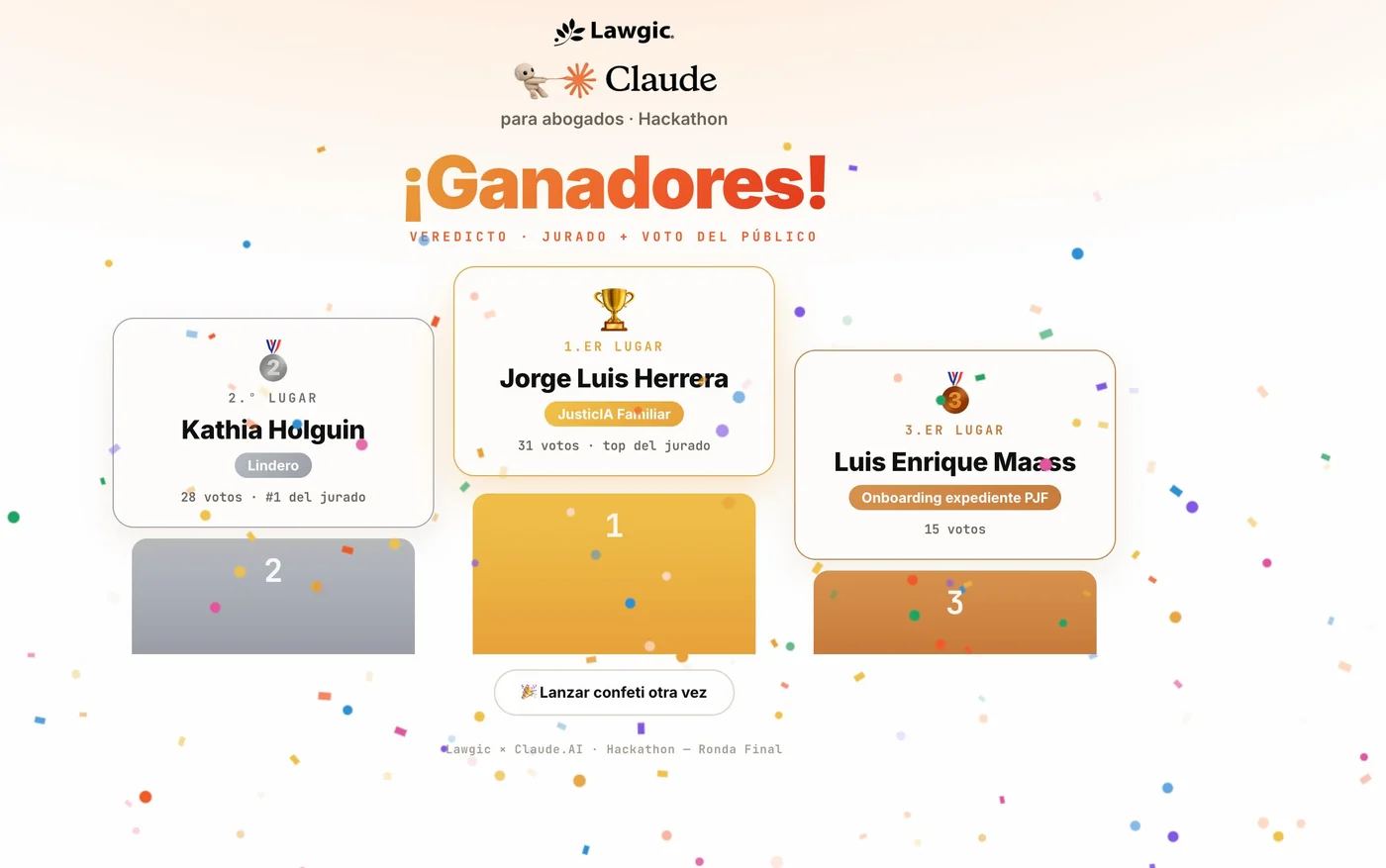
The verdict combined the jury's vote and the public's vote. These were the top three:
2nd place
Kathia Holguín
Lindero28 votes · #1 jury
1st place
Jorge Luis Herrera
JusticIA Familiar31 votes · top jury
3rd place
Luis Enrique Maass
PJF case-file onboarding15 votes
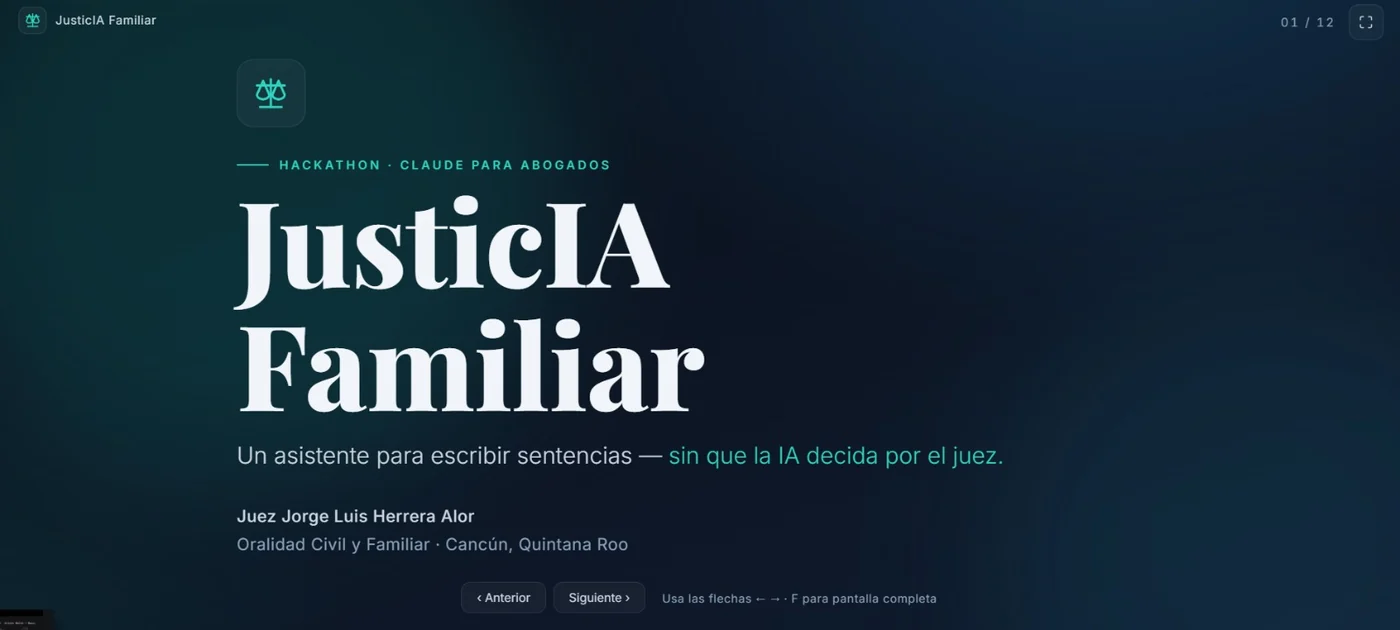
JusticIA Familiar, by judge Jorge Luis Herrera Alor, took first place with an idea as powerful as it is prudent: an assistant that helps the judge structure the draft of a family-law oral-proceeding ruling—grounded in the law of Quintana Roo and in real Supreme Court (SCJN) case law with its registry number—without the AI deciding for the judge. The judgment, the assessment, and the signature remain the judge's.
The 8 finalists
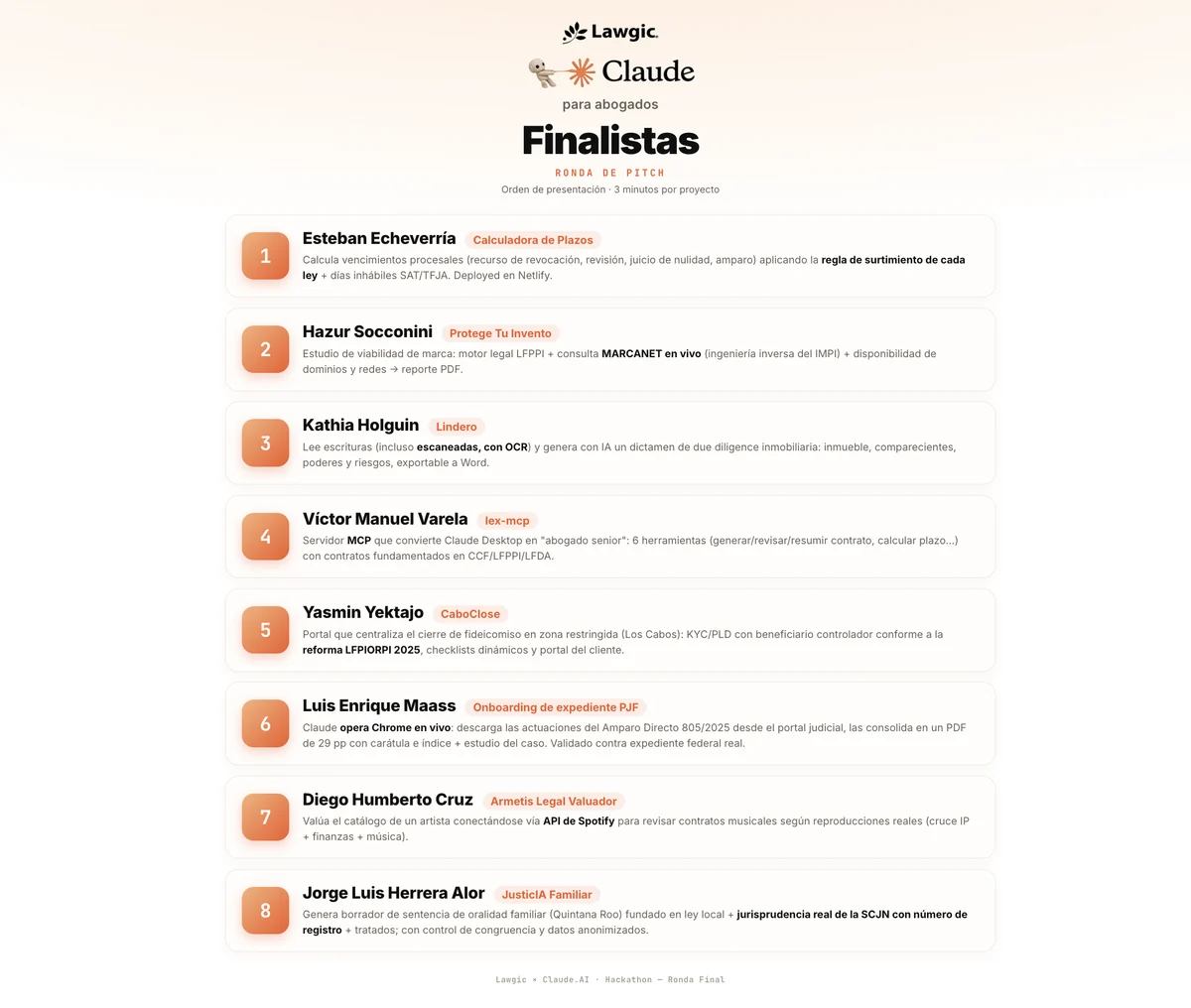
Eight projects advanced to the pitch round (three minutes each). This was the lineup:
Deadline Calculator
Esteban Echeverría
Computes procedural deadlines (appeals, review, nullity, amparo) applying each statute's service-of-notice rule and the non-working days of the SAT and the TFJA.
Protege Tu Invento
Hazur Socconini
Trademark viability study: an LFPPI rules engine + a live query to MARCANET (via an automated browser) + domain and social-handle availability, with a PDF report.
Lindero
Kathia Holguín
Reads deeds—even scanned ones, with OCR—and generates a real-estate due-diligence opinion: property, parties, powers of attorney and risks, exportable to Word.
lex-mcp
Víctor Manuel Varela
An MCP server that turns Claude Desktop into the firm's "senior lawyer": six tools (draft and review contracts, compute deadlines…) grounded in the CCF, LFPPI and LFDA.
CaboClose
Yasmin Yektajo
Centralizes the closing of a restricted-zone trust (Los Cabos): KYC/AML with beneficial-owner identification per the 2025 reform, dynamic checklists and a client portal.
PJF case-file onboarding
Luis Enrique Maass
Drives Chrome live to download the filings of a federal Judiciary case, consolidate them into an indexed PDF, and generate a case study.
Armetis Legal Valuador
Diego Humberto Cruz
Values an artist's catalog by connecting via API to Spotify, to review contracts based on real streams (crossing intellectual property with finance).
JusticIA Familiar
Jorge Luis Herrera
An assistant for structuring drafts of family-law oral-proceeding rulings, grounded in local law and real SCJN case law, with consistency checks and anonymized data.
The range of projects
The most revealing part was not the final, but the breadth. The 30-plus submissions covered nearly the entire profession: computing deadlines and terms, case-file management, trademark search and viability before the IMPI, real-estate and corporate due diligence, compliance (including the NOM-035), contract review and drafting, labor severance calculations, and even the valuation of music catalogs.
A few examples from the rest of the field: Fiscal S.O.S., which translates the tax authority's (SAT) requirements into language anyone can understand; MILEXLEGAL, which gives a contract a 0-to-100 risk score and explains its clauses in plain Spanish; Lexpediente, a case-management PWA with deadline computation; and servers that connect Claude directly to the judicial portals to read and organize filings. Each one was born from a real, everyday pain point of practice.
How they built it
The common thread: Claude Code and the Claude API. Most wrote no code by hand—they described what they wanted in Spanish and Claude designed the interface, programmed the logic, integrated the AI and published the app. Several went further: they had Claude operate the browser live to reverse-engineer MARCANET, or stood up an MCP server to turn Claude Desktop into their working tool.
The pattern that recurred most across the submissions was legal discipline: anti-hallucination prompts, grounding in specific articles (CCF, LFPPI, LFDA, LFT), and the insistence that the AI assists, it does not decide. That is exactly the right mindset.
Mentors and sessions
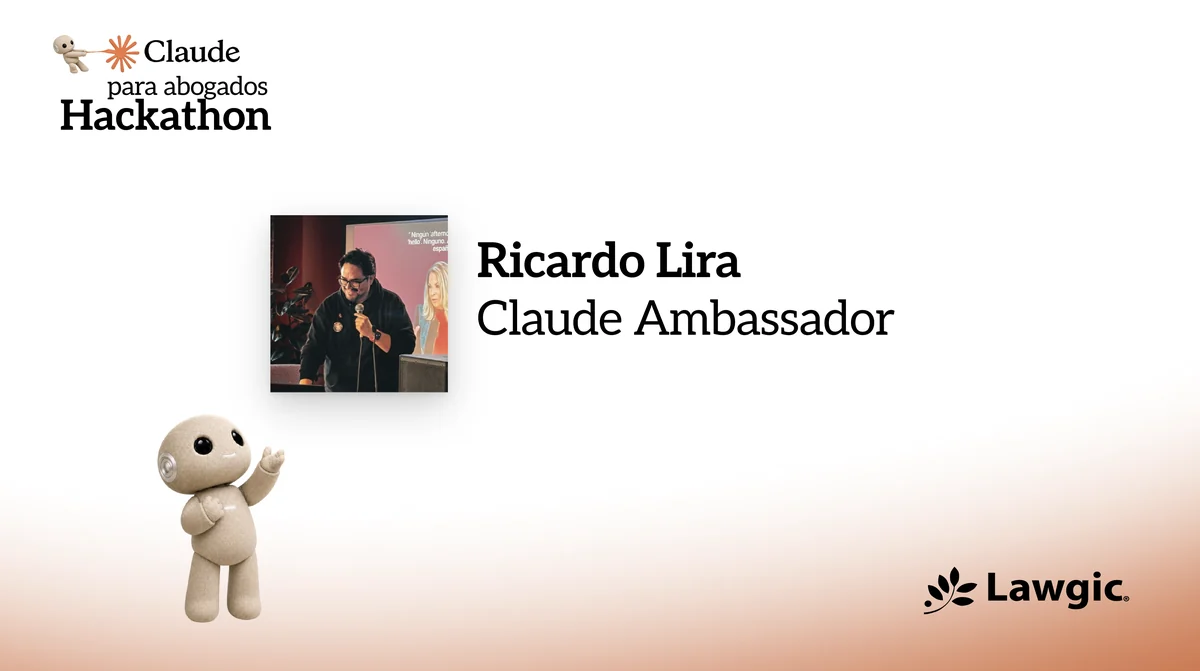
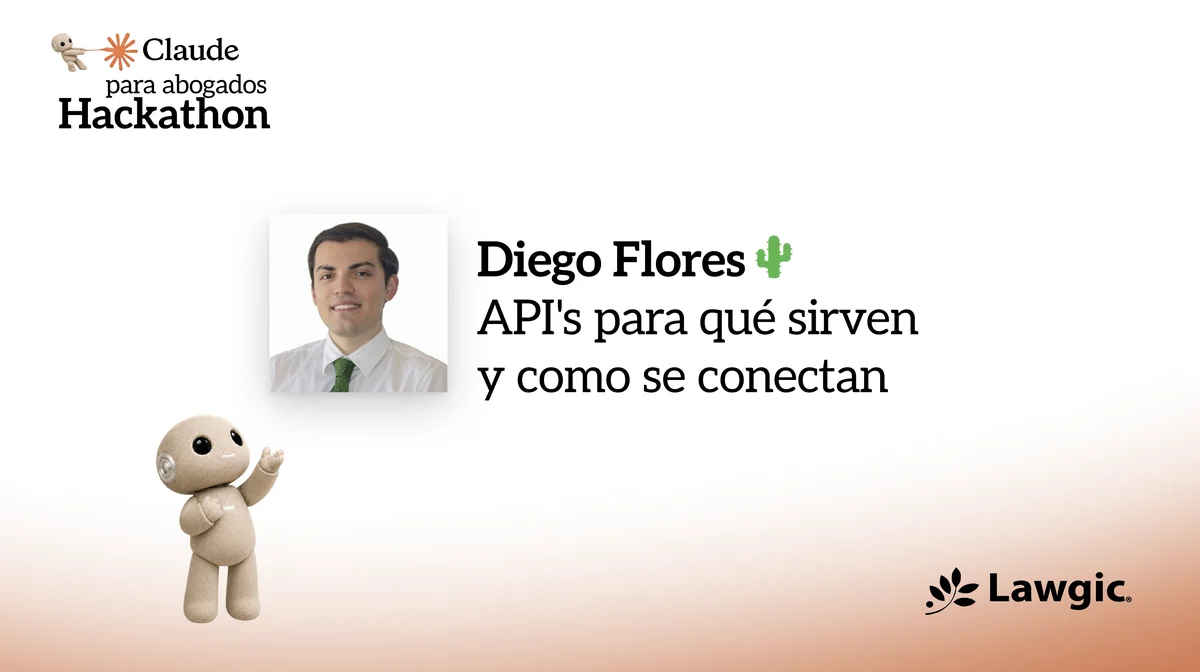
The day combined building with learning. Among the sessions, Ricardo Lira (Claude Ambassador) and Diego Flores explained the essentials for a lawyer to go from idea to product: from how to think with Claude to what APIs are for and how they connect.
What the hackathon proved
That the barrier between the lawyer and legal AI is no longer technical: it is a matter of decision. In a few hours, professionals with no programming background shipped tools that save hours of repetitive work and that respect legal judgment. It is not about replacing the lawyer, but about giving back the time to do what only the lawyer can do.
Thank you to every participant, to the mentors, and to Claude for making it possible. This is just the beginning.