IP & Copyright
Ruling 6/2025: Between the Denial of Authorship to AI and the Questions That Were Never Asked
August 28, 2025 — After a 22-day delay, the full written opinion of the long-awaited ruling in case 6/2025 has finally arrived…
 Aldo Ricardo Rodríguez CortésLegal AI · AI & Law
3 min read
Aldo Ricardo Rodríguez CortésLegal AI · AI & Law
3 min read
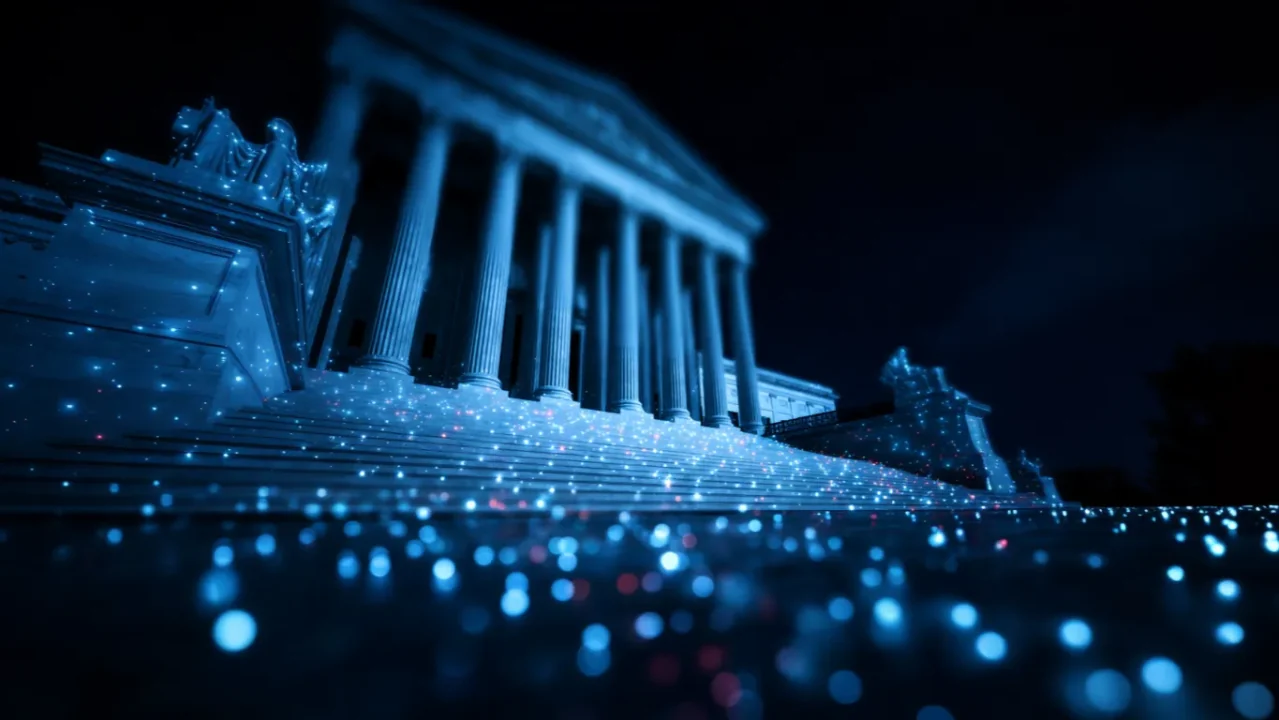
August 28, 2025 — After a 22-day delay, the full written opinion of the long-awaited ruling in case 6/2025 has finally arrived. In that case, Gerald García Báez sought to have moral copyright rights granted to the AI "Leonardo," while reserving the economic rights for himself.
Without claiming to exhaustively analyze the ruling's 28 pages (which I encourage anyone working in intellectual property to read), I will focus on its most relevant aspects and the missed opportunities this judgment represents.
The central decision: an outright denial
The ruling is unambiguous in its fundamental reasoning: AI cannot enjoy copyright authorship rights, which belong exclusively to human beings. The court's main arguments were:
In paragraph 53, the Second Chamber holds that:
"recognition of authorship by synthetic or artificial entities is impossible, since the right to creative protection is itself a human right." Humanness, it argues, carries intrinsic characteristics that are incompatible with artificial intelligence.
Paragraph 54 reinforces this position:
"Works subject to registration and protection are the product of human creation, since a synthetic or artificial entity cannot create an original work."
Up to this point, the ruling squarely addresses the question before it. However, it is in paragraph 58 that a problematic assertion emerges, one that reveals the limitations of the analysis:
"This Second Chamber of the SCJN finds that artificial intelligence does not possess the characteristics of individuality and originality that a human being has by virtue of creativity, experience, perception of the surrounding environment, and feelings."
The missing technical distinction: "BY" versus "WITH"
This is where the ruling misses a crucial opportunity to establish fundamental technical distinctions. Specialized doctrine recognizes three models of human-AI interaction:
1. AI "with" humans (human-in-the-loop)
The AI always requires human confirmation before executing any creative action.
Practical example: An illustrator uses MidJourney to generate variations of a sketch. The AI proposes four images, but the artist selects one, manually edits it in Photoshop, and approves it as the final version. The human role is evident: he wrote the prompt, decided which variant to keep, and made the final adjustments.
2. AI "over" humans (human-on-the-loop)
The machine makes decisions, but the human retains the ability to intervene or interrupt.
Practical example: With Google DeepMind Genie 3, the creator inputs a description such as "futuristic city at night." The AI automatically generates a complete, interactive 3D world. The human does not approve each iteration, but can interrupt the process, adjust parameters, or discard results. Their role is that of curator and supervisor, not co-creator at every step.
3. AI "without" humans (human-out-of-the-loop)
No direct human supervision exists; the AI makes final decisions autonomously.
Current examples are minimal and, frankly, trivial: artistic bots on Instagram or X that automatically generate and publish images using DALL-E or similar tools through APIs and automation platforms.
The missed opportunity
I must confess that I found it difficult to identify genuine examples where AI operates in "human-on-the-loop" or "human-out-of-the-loop" mode in meaningful creative contexts. In the vast majority of cases, creative work originates from human intentionality — at least for now.
The ruling, at 28 pages, had ample space to establish this fundamental distinction between works created "BY" AI versus works created "WITH" AI. This omission is particularly frustrating given that the court clearly exhausted — and even exceeded — the arguments necessary to resolve the main question before it.
Final reflection
I do not deny that there are cases where AI acts autonomously in creative processes, but when we speak of works protectable by copyright, those cases are the exception, not the rule. Ruling 6/2025 correctly resolves the substantive question — denying moral rights to AI — but it misses the opportunity to establish a more nuanced legal framework for the real-world human-AI collaboration scenarios that dominate today's creative landscape.
The debate should not be whether AI can be an author (clearly it cannot), but rather how we recognize and protect human creativity when it is expressed through increasingly sophisticated AI tools. That is the conversation we need to have, and one that this ruling, regrettably, does not address.