Legal AI Lab®  ·  Case 01 / Icebreaker
← aldoricardo.com

Flagship project  ·  Icebreaker

Rodríguez v. INDAUTOR: can a work created with artificial intelligence be registered?

INDAUTOR issued a requirement and then dismissed two parallel applications to register a work (one with GPT-4o / one prompt, the other with Midjourney / five prompts), holding that the images, being the product of "synthetic" artificial intelligence, lack creativity, human intellect and originality; the applicant responded to the requirement (May 27, 2025), was dismissed under art. 17-A LFPA and filed a nullity trial before the Specialized Chamber on Intellectual Property of the TFJA (file 1637/25-EPI-01-10). In May 2026 the Chamber handed down judgments in both case files and upheld the denials; the amparo proceeding remains pending.

Works2 works / 2 folios
CDMX 2100
ToolsChatGPT‑4o (1 prompt)
Midjourney (5 prompts)
AuthorityINDAUTOR
Public Registry of Copyright
Status2026 TFJA judgments · denials upheld
Pending: amparo
Folio …263900-01 · GPT-4o
CIUDAD DE MÉXICO 2100 work generated with ChatGPT-4o: the Angel of Independence surrounded by futuristic green skyscrapers on Paseo de la Reforma
Folio …254000-01 · Midjourney
MEXICO 2,100 work generated with Midjourney: aerial view of Paseo de la Reforma in the year 2100

The work

Two views of Mexico City in 2100, two tools, one and the same legal experiment.

The experiment was deliberately transparent: to register as a drawing work (original, undisclosed) two AI-generated images, openly declaring the tool used — even naming it in the title — in order to force the authority to rule on the merits of human authorship assisted by AI.

Work generated with ChatGPT-4o
ChatGPT‑4o · a single prompt

CIUDAD DE MÉXICO 2100 — UN SOLO PROMPT — OPEN AI GPT4o

Folio 03-2025-043011263900-01 · Branch: DRAWING

Panoramic view of Paseo de la Reforma with the Angel of Independence as the focal point. The applicant stated that it was created “exclusivamente mediante indicaciones de texto procesadas por ChatGPT4o”, with no subsequent manual intervention or external visual sources.

Work generated with Midjourney
Midjourney · five prompts

MEXICO 2,100 — 5 PROMPTS — IA GENERATIVA — MIDJOURNEY

Folio 03-2025-043011254000-01 · Branch: DRAWING

Overhead aerial view of Paseo de la Reforma projected to the year 2100, with the Angel restored and surrounded. A parallel work generated with Midjourney through at least five iterative prompts.

Timeline

Two matters in parallel, one and the same experiment.

This is not a single proceeding: there are two separate files —one for each work and tool— that advanced in parallel before INDAUTOR. Each column follows its own chain: application, requirement, dismissal and nullity trial. The shared milestones (the filing, the notification, the response) appear in both.

Matter A ChatGPT‑4o · one prompt Folio 03-2025-043011263900-01
August 30, 2024 Application

External precedent invoked: TFJA judgment 788/24-EPI-01-2

TFJA - Specialized Chamber on Intellectual Property

Judgment in nullity trial 788/24-EPI-01-2 decided by the Specialized Chamber on IP of the TFJA. It establishes the elements for something to be a protectable 'work' (creation of the human intellect; originality; fixation in a material medium) and, according to the official letters, that AI outputs are not original works. In that case the plaintiff sought to attribute authorship to the AI itself. It is the central precedent that INDAUTOR cites to deny registration and that the applicant reinterprets in his favor. Date of resolution according to the applicant: August 30, 2024.

788/24-EPI-01-2

“La contestación de demanda se apoya centralmente en la sentencia del juicio de nulidad 788/24-EPI-01-2, resuelta por esta misma Sala Especializada el 30 de agosto de 2024”
ALEGATOS_Rodriguez_v_INDAUTOR_v11.pdf
veinticinco de abril del año dos mil veinticinco / April 25, 2025 Application

Filing of the two registration applications via INDARELÍN (according to official letters and complaints)

Aldo Ricardo Rodríguez Cortés, through Ulises Torres Gutiérrez

According to INDAUTOR's requirement letters (TL9444 and TL9449) and the nullity complaints, the registration applications were filed through the INDARELÍN system on April 25, 2025. CONFLICT: the acknowledgments (RPDA Reports / Solicitud.md) record 05/27/2025 as the 'Application date'. Folio ...263900-01 = GPT-4o work (one prompt); folio ...254000-01 = Midjourney work (five prompts). Both in the DRAWING branch, original work not yet made public. In acknowledgment ...254000-01 the author's name was erroneously recorded as 'Aldo Rodríguez Rodríguez Cortes'.

Folios 03-2025-043011263900-01 and 03-2025-043011254000-01

“En relación con el trámite de registro de obra presentado ante este H. Instituto Nacional del Derecho de Autor mediante el sistema INDARELÍN, el día veinticinco de abril del año dos mil veinticinco, a la cual le correspondió el número de folio al rubro citado”
_DRPDA_SROC_TL9444_2025 (2).pdf / ofi_03202504301125400001 (2).pdf / DEMANDA de Juicio de Nulidad cinco p.pdf
Ciudad de México, a 30 de abril de 2025 Requirement

REQUIREMENT/PREVENTION letter folio ...263900-01 (ChatGPT-4o)

Francisco Erasmo de los Santos Cordero, Head of the Department of Registration of Works (INDAUTOR)

INDAUTOR issues letter DRPDA/SROC/TL9444/2025 regarding folio ...263900-01. It finds that the work is AI-generated content (ChatGPT-4o) and issues a requirement with THREE points: (FIRST) refile the application and state in detail the creative exercise/originality and the participation of the natural person, clarifying which part results from the AI; (SECOND) refile the specimen omitting or detailing the degree/type of AI participation; (THIRD) in accordance with the ChatGPT-4o terms of use, indicate who owns/holds the assets. Term: five business days, under warning of dismissal. No observation of name discrepancy. Signed with advanced electronic signature (initials FEDLSC).

DRPDA/SROC/TL9444/2025

“esta autoridad administrativa en Derechos de Autor y Derechos Conexos, le requiere lo siguiente: PRIMERO.- Reponga la solicitud... en el apartado de síntesis deberá manifestar detalladamente el ejercicio creativo del autor, es decir la originalidad de la obra, y detallar la participación de la persona física, aclarando del ejemplar presentado, la parte que resulta de la participación de inteligencia artificial”
_DRPDA_SROC_TL9444_2025 (2).pdf
May twentieth, two thousand twenty-five Notice of Deficiency

Service of the notices of deficiency (both file numbers)

INDAUTOR - Subdirectorate for the Registration of Works and Contracts

The subsequent dismissal orders state that requirements TL9444/2025 (GPT-4o) and TL9449/2025 (Midjourney) were served on May twentieth, two thousand twenty-five. This is the service date that triggers the five-business-day term.

DRPDA/SROC/TL9444/2025 y DRPDA/SROC/TL9449/2025

“Hago referencia al oficio DRPDA/SROC/TL9444/2025, notificado el veinte de mayo de dos mil veinticinco mediante el cual se le requirió lo siguiente”
-- Oficio DRPDA:SROC:TL1971:2025.pdf / Oficio DRPDA:SROC:TL1972:2025 .pdf
May 27, 2025 (twenty-seventh of May, two thousand twenty-five) Notice of Deficiency

Response / cure of the notice(s) of deficiency by the applicant

Aldo Ricardo Rodríguez Cortés / Ulises Torres Gutiérrez

The applicant files a written response to the notice of deficiency on May 27, 2025. The only response located in the 'oficios-requerimiento' group is addressed to official letter TL9449 (file ...254000-01, Midjourney) and develops seven sections: (I) creativity through prompts; (II) AI as a neutral tool (Burrow-Giles); (III) originality/minimum threshold and comparative case law (Feist, Bleistein, Thaler, USCO 'American Cheese'); (IV) compliance with the three elements of the TFJA 788/24 criterion; (V) technological neutrality and the bill to amend the LFDA; (VI) ownership of the assets under Midjourney's Terms of Service (Exhibit 1, in force as of Apr 17, 2025); (VII) conclusion and prayer for relief. It states that the name inconsistency has already been cured before INDARELÍN. The 'Contestacion.md' version (legal-arguments group) is parallel and refers to OpenAI/GPT-4o and to official letter TL9444 (file ...263900-01). INDAUTOR expressly acknowledges the response in its resolutions.

Contestación al Oficio DRPDA/SROC/TL9449/2025 (Midjourney) y contestación equivalente al TL9444 (GPT-4o)

“Solicito respetuosamente se tenga por desahogado en tiempo y forma el requerimiento contenido en el oficio DRPDA/SROC/TL9449/2025, habiendo quedado plenamente aclarada la originalidad de la obra, la intervención creativa del autor humano en la misma, así como la titularidad de los derechos sobre ella a favor del suscrito.”
contestación_de_requerimiento (2).pdf / Contestacion.md
June 10, 2025 Dismissal

DISMISSAL of the GPT-4o application (file ...263900-01)

Jessica Ivonne Martínez Guzmán, Subdirector for the Registration of Works and Contracts (INDAUTOR)

INDAUTOR dismisses the application 'CIUDAD DE MÉXICO 2100 - UN SOLO PROMPT - OPEN AI GPT4o' (file ...263900-01) by means of Official Letter DRPDA/SROC/TL1971/2025. It holds that the first point of the requirement was not addressed; that only a natural person may be an author (arts. 3, 11 and 12 LFDA); that the work lacks the protection elements of the TFJA 788/24 criterion; that AI is not a 'mere tool' (citing WIPO); that data mining puts third-party rights at risk (Vicente 2021); that U.S. comparative law does not apply (art. 1 CPEUM); and that the specimen is the product of 'synthetic' AI, without human creativity or intellect. It orders the matter archived as fully and definitively concluded (art. 17-A LFPA). Advanced electronic signature; initials at the foot 'MFZA'. It notes the availability of the recurso de revisión (art. 237 LFDA / art. 83 LFPA).

DRPDA/SROC/TL1971/2025

“esta autoridad administrativa considera procedente desechar el trámite intitulado, CIUDAD DE MÉXICO 2100 - UN SOLO PROMPT - OPEN AI GPT4o, con número de folio, 03-2025-043011263900-01, ordenando su archivo como asunto total y definitivamente concluido.”
-- Oficio DRPDA:SROC:TL1971:2025.pdf
July 03, 2025 Dismissal

Dismissal resolution identified as the challenged act in the nullity proceeding (CONFLICT)

INDAUTOR - Francisco Erasmo De Los Santos Cordero, Head of the Department for the Registration of Works

In the nullity-proceeding-B group (long/condensed complaint and closing arguments) the challenged act is identified as Official Letter DRPDA/SROC/TL9449/2025 dated July 3, 2025 and signed by Francisco Erasmo De Los Santos Cordero. THIS CONFLICTS with: (a) the primary letters in the 'desechamientos' group, where TL9449/2025 is the REQUIREMENT (Apr 30, 2025) and the dismissals are TL1971/TL1972 of June 10, 2025 signed by Jessica Ivonne Martínez Guzmán; and (b) the very prayer for relief of the CLOSING ARGUMENTS, which seeks the nullity of Official Letter DRPDA/SROC/TL1971/2025 of June 10, 2025. The contradiction is not resolved; it is reported as is.

DRPDA/SROC/TL9449/2025 (según juicio-nulidad-B) — en conflicto con TL1971/TL1972 del 10-jun-2025

“la autoridad responsable emitió la resolución final contenida en el Oficio DRPDA/SROC/TL9449/2025, fechada el 03 de julio de 2025 y notificada electrónicamente en la misma fecha, mediante la cual confirmó la negativa de registro”
JuicioNulidad2.md / JuicioNulidad1.md
July 07, 2025 Nullity Proceeding

Electronic service of the challenged resolution (per the complaints)

INDAUTOR

The nullity complaints state that the dismissal resolution was served electronically on July 7, 2025, the date on which the 30-business-day term under the LFPCA begins to run. NOTE: the condensed version (JuicioNulidad2.md) states instead that service occurred 'on the same date' as issuance (Jul 3, 2025); an internal discrepancy that is not resolved.

“con fecha de emisión 03 de julio de 2025 y notificada electrónicamente en esta misma fecha, 07 de julio de 2025”
DEMANDA de Juicio de Nulidad cinco p.pdf / JuicioNulidad1.md
Mexico City, July 8, 2025 Nullity Proceeding

Date of the Nullity Proceeding complaints (signed)

Aldo Ricardo Rodríguez Cortés

The two versions of the complaint in the nullity-proceeding-B group (JuicioNulidad1.md, the developed one, and JuicioNulidad2.md, the condensed one, both relating to the GPT-4o work / file ...263900-01) are dated in Mexico City on July 8, 2025, signed by Aldo Ricardo Rodríguez Cortés in his own right. NOTE: the complaints in the nullity-proceeding-A group (DEMANDA de Juicio de Nulidad un p / cinco p) do not record an actual filing date, only the timeliness calculation (term Sep 9, 2025).

“Ciudad de México, a 8 de julio de 2025. A T E N T A M E N T E. Aldo Ricardo Rodríguez Cortés”
JuicioNulidad2.md
TUESDAY, SEPTEMBER 09, 2025 Nullity Proceeding

Expiration of the 30-business-day term to file suit (plaintiff's calculation)

Aldo Ricardo Rodríguez Cortés

In the TIMELINESS section of the 'un p' and 'cinco p' complaints, the plaintiff calculates the 30-business-day term under the LFPCA: 4 business days in July (from service on Jul 7), 19 in August and 7 in September 2025, ending on Tuesday, September 9, 2025. The documents do not record the exact date of actual filing or any TFJA acknowledgment of receipt.

“Y transcurriendo 7 siete días hábiles en el mes de septiembre 2025, culminando el día del término en el MARTES 09 NUEVE DE SEPTIEMBRE 2025.”
DEMANDA de Juicio de Nulidad cinco p.pdf
Date not specified (litigation stage, 2025) Nullity Proceeding

Docketing of the proceeding and INDAUTOR's answer to the complaint

TFJA - Specialized Chamber on IP / INDAUTOR (Perla Nancy Vásquez Castelán)

The nullity proceeding was docketed before the Specialized Chamber on Intellectual Property Matters of the TFJA, Case File 1637/25-EPI-01-10, Instructing Magistrate Héctor Francisco Fernández Cruz. INDAUTOR filed its answer to the complaint, signed by Perla Nancy Vásquez Castelán, Subdirector for Contentious Affairs of INDAUTOR, relying centrally on judgment 788/24-EPI-01-2 and on amparo en revisión 6/2025 of the Second Chamber of the SCJN. NOTE: the ISO date 2025-09-15 is an approximate ordering marker; the documents do not specify the date of docketing or of the answer.

Expediente 1637/25-EPI-01-10

“La contestación de demanda formulada por la C. Perla Nancy Vásquez Castelán, Subdirectora de Asuntos Contenciosos del INDAUTOR, lejos de desvirtuar los conceptos de impugnación planteados en la demanda, los confirma y profundiza.”
ALEGATOS_Rodriguez_v_INDAUTOR_v11.pdf
Date not specified (2025)Closing Arguments

Filing of CLOSING ARGUMENTS by the plaintiff before the TFJA

Roberto Ibarra López (legal representative of the plaintiff)

Roberto Ibarra López, authorized legal representative (license 9045105, art. 5 sec. II LFPCA), files CLOSING ARGUMENTS based on art. 47 LFPCA in case file 1637/25-EPI-01-10 before Instructing Magistrate Héctor Francisco Fernández Cruz, responding to INDAUTOR's answer to the complaint. He maintains that the answer confirms and deepens the defects, again acknowledges that there was indeed a response to the requirement (which renders art. 17-A LFPA inapplicable) and leaves the core arguments materially unanswered (ultra vires, distortion of sources, obsolete sources, moral rights, art. 164 closed catalogue, declaratory nature), and therefore requests that they be deemed admitted (art. 46 sec. I CFPC). The document does not record a filing date; the ISO date 2025-10-01 is an approximate marker. PRAYER FOR RELIEF: outright and plain nullity and an order to register the work.

Case file 1637/25-EPI-01-10 (closing arguments art. 47 LFPCA)

“Roberto Ibarra López, en mi carácter de representante legal de la parte actora Aldo Ricardo Rodríguez Cortés... vengo a formular ALEGATOS con base en las constancias de autos”
ALEGATOS_Rodriguez_v_INDAUTOR_v11.pdf
Pending Pending

Final judgment of the TFJA (pending)

TFJA - Specialized Chamber on Intellectual Property Matters

According to the available documents, the issuance of the final judgment by the TFJA is PENDING. There is no judgment or any rulings subsequent to the closing arguments on record. The claims for outright and plain nullity and for an order to register the work in the plaintiff's name remain to be resolved, as well as, if applicable, the taking of the expert evidence offered (computer science/LLM, literary creation, administrative law). The ISO date is a marker; there is no actual date in the documents.

“dictar en su oportunidad sentencia definitiva en la que se declare la NULIDAD LISA Y LLANA de la resolución impugnada... proceda a inscribir en el Registro Público del Derecho de Autor la obra”
JuicioNulidad2.md / ALEGATOS_Rodriguez_v_INDAUTOR_v11.pdf
Matter B Midjourney · five prompts Folio 03-2025-043011254000-01
August 30, 2024 Application

External precedent invoked: TFJA judgment 788/24-EPI-01-2

TFJA - Specialized Chamber on Intellectual Property Matters

Judgment in nullity proceeding 788/24-EPI-01-2 decided by the TFJA's Specialized Chamber on IP. It establishes the elements for something to be a protectable 'work' (creation of the human intellect; originality; fixation in a material medium) and, according to the official letters, that AI outputs are not original works. In that case the plaintiff sought to attribute authorship to the AI itself. It is the central precedent that INDAUTOR cites to deny registration and that the applicant reinterprets in his favor. Date of resolution according to the applicant: August 30, 2024.

788/24-EPI-01-2

“La contestación de demanda se apoya centralmente en la sentencia del juicio de nulidad 788/24-EPI-01-2, resuelta por esta misma Sala Especializada el 30 de agosto de 2024”
ALEGATOS_Rodriguez_v_INDAUTOR_v11.pdf
twenty-fifth of April of the year two thousand twenty-five / April 25, 2025 Application

Filing of the two registration applications via INDARELÍN (according to official letters and complaints)

Aldo Ricardo Rodríguez Cortés, through Ulises Torres Gutiérrez

According to INDAUTOR's requirement letters (TL9444 and TL9449) and the nullity complaints, the registration applications were filed through the INDARELÍN system on April 25, 2025. CONFLICT: the acknowledgments (RPDA Reports / Solicitud.md) record 05/27/2025 as the 'Application date'. Folio ...263900-01 = GPT-4o work (one prompt); folio ...254000-01 = Midjourney work (five prompts). Both under the DRAWING branch, primigenial work not previously disclosed. In the acknowledgment ...254000-01 the author's name was mistakenly recorded as 'Aldo Rodríguez Rodríguez Cortes'.

Folios 03-2025-043011263900-01 and 03-2025-043011254000-01

“En relación con el trámite de registro de obra presentado ante este H. Instituto Nacional del Derecho de Autor mediante el sistema INDARELÍN, el día veinticinco de abril del año dos mil veinticinco, a la cual le correspondió el número de folio al rubro citado”
_DRPDA_SROC_TL9444_2025 (2).pdf / ofi_03202504301125400001 (2).pdf / DEMANDA de Juicio de Nulidad cinco p.pdf
Mexico City, April 30, 2025 Preventive Notice

REQUIREMENT/PREVENTIVE NOTICE official letter, folio ...254000-01 (Midjourney)

Francisco Erasmo de los Santos Cordero, Head of the Works Registration Department (INDAUTOR)

INDAUTOR issues official letter DRPDA/SROC/TL9449/2025 regarding folio ...254000-01. It detects TWO inconsistencies and issues a preventive notice with FOUR points: (FIRST) refile the application so that the name of the author/holder matches the power of attorney and INE ID ('Aldo Rodríguez Rodríguez Cortes' vs. 'Aldo Ricardo Rodríguez Cortes'); (SECOND) detail the creative exercise/originality and the participation of the natural person, clarifying the AI portion; (THIRD) refile the sample copy omitting/detailing the AI; (FOURTH) in accordance with Midjourney's terms of use, identify the owner/holder of the assets. Term: five business days, with a warning of dismissal. Same signatory and date as TL9444.

DRPDA/SROC/TL9449/2025

“Se advierten dos inconsistencias en su solicitud de registro en línea y la documentación anexa al mismo; la primera consiste en que, no coincide el nombre del autor y titular con la documentación adjunta (carta poder e identificación); la segunda, referente a lo manifestado en el apartado de síntesis.”
ofi_03202504301125400001 (2).pdf
twentieth of May of two thousand twenty-five Preventive Notice

Notification of the preventive notices (both folios)

INDAUTOR - Subdirectorate of Works and Contracts Registration

The subsequent dismissal letters state that requirements TL9444/2025 (GPT-4o) and TL9449/2025 (Midjourney) were notified on the twentieth of May of two thousand twenty-five. This is the notification date that triggers the five-business-day term.

DRPDA/SROC/TL9444/2025 and DRPDA/SROC/TL9449/2025

“Hago referencia al oficio DRPDA/SROC/TL9444/2025, notificado el veinte de mayo de dos mil veinticinco mediante el cual se le requirió lo siguiente”
-- Oficio DRPDA:SROC:TL1971:2025.pdf / Oficio DRPDA:SROC:TL1972:2025 .pdf
May 27, 2025 (twenty-seventh of May of two thousand twenty-five) Preventive Notice

Response / compliance with the preventive notice(s) by the applicant

Aldo Ricardo Rodríguez Cortés / Ulises Torres Gutiérrez

The applicant files a written response to the preventive notice on May 27, 2025. The only response located in the 'requirement-letters' group is addressed to official letter TL9449 (folio ...254000-01, Midjourney) and develops seven sections: (I) creativity through prompts; (II) AI as a neutral tool (Burrow-Giles); (III) originality/minimum threshold and comparative case law (Feist, Bleistein, Thaler, USCO 'American Cheese'); (IV) compliance with the three elements of the TFJA 788/24 criterion; (V) technological neutrality and the bill to reform the LFDA; (VI) ownership of the assets under Midjourney's Terms of Service (Annex 1, effective Apr-17-2025); (VII) conclusion and prayer for relief. He states that the name inconsistency has already been remedied by INDARELÍN. The 'Contestacion.md' version (legal-arguments group) is parallel and refers to OpenAI/GPT-4o and to official letter TL9444 (folio ...263900-01). INDAUTOR expressly acknowledges the response in its resolutions.

Response to Official Letter DRPDA/SROC/TL9449/2025 (Midjourney) and equivalent response to TL9444 (GPT-4o)

“Solicito respetuosamente se tenga por desahogado en tiempo y forma el requerimiento contenido en el oficio DRPDA/SROC/TL9449/2025, habiendo quedado plenamente aclarada la originalidad de la obra, la intervención creativa del autor humano en la misma, así como la titularidad de los derechos sobre ella a favor del suscrito.”
contestación_de_requerimiento (2).pdf / Contestacion.md
June 10, 2025 Dismissal

DISMISSAL of the Midjourney procedure (folio ...254000-01)

Jessica Ivonne Martínez Guzmán, Deputy Director of Works and Contracts Registration (INDAUTOR)

INDAUTOR dismisses the 'MEXICO 2,100 - 5 PROMPTS - INTELIGENCIA ARTIFICIAL GENERATIVA - MIDJOURNEY' procedure (folio ...254000-01) by means of Official Letter DRPDA/SROC/TL1972/2025. It acknowledges that the first point of the requirement (matching of the author/holder name) was remedied, but that the second point was not addressed. Same substantive reasoning as TL1971 ('synthetic' AI, lacking creativity/intellect/originality). It orders the file closed as a matter fully and definitively concluded (art. 17-A LFPA). Same signatory and initials 'MFZA'.

DRPDA/SROC/TL1972/2025

“Ahora bien, por cuanto hace al primer punto del requerimiento se encuentra subsanado; no obstante, lo referente al segundo punto no fue atendido”
Oficio DRPDA:SROC:TL1972:2025 .pdf
July 3, 2025 Dismissal

Dismissal ruling identified as the challenged act in the nullity proceeding (CONFLICT)

INDAUTOR - Francisco Erasmo De Los Santos Cordero, Head of the Works Registration Department

In the nullity-proceeding-B group (long/condensed complaint and closing arguments), the challenged act is identified as Oficio DRPDA/SROC/TL9449/2025 dated July 3, 2025 and signed by Francisco Erasmo De Los Santos Cordero. THIS CONFLICTS with: (a) the primary office letters in the 'dismissals' group, where TL9449/2025 is the REQUEST FOR INFORMATION (Apr 30, 2025) and the dismissals are TL1971/TL1972 of Jun 10, 2025 signed by Jessica Ivonne Martínez Guzmán; and (b) the PETITION in the closing arguments itself, which seeks the nullity of office letter DRPDA/SROC/TL1971/2025 of June 10, 2025. The contradiction is not resolved; it is reported as is.

DRPDA/SROC/TL9449/2025 (per nullity-proceeding-B) — in conflict with TL1971/TL1972 of Jun 10, 2025

“la autoridad responsable emitió la resolución final contenida en el Oficio DRPDA/SROC/TL9449/2025, fechada el 03 de julio de 2025 y notificada electrónicamente en la misma fecha, mediante la cual confirmó la negativa de registro”
JuicioNulidad2.md / JuicioNulidad1.md
July 7, 2025 Nullity Proceeding

Electronic notification of the challenged ruling (per the complaints)

INDAUTOR

The nullity complaints state that the dismissal ruling was notified electronically on July 7, 2025, the date that triggers the 30-business-day deadline under the LFPCA. NOTE: the condensed version (JuicioNulidad2.md) instead asserts that notification took place 'on the same date' as issuance (Jul 3, 2025); an unresolved internal discrepancy.

“con fecha de emisión 03 de julio de 2025 y notificada electrónicamente en esta misma fecha, 07 de julio de 2025”
DEMANDA de Juicio de Nulidad cinco p.pdf / JuicioNulidad1.md
TUESDAY, SEPTEMBER 9, 2025 Nullity Proceeding

Expiration of the 30-business-day deadline to file suit (plaintiff's calculation)

Aldo Ricardo Rodríguez Cortés

In the TIMELINESS section of the 'un p' and 'cinco p' complaints, the plaintiff calculates the 30-business-day deadline under the LFPCA: 4 business days in July (from the July 7 notification), 19 in August and 7 in September 2025, ending on Tuesday, September 9, 2025. The documents do not record the exact date of physical filing or the TFJA's acknowledgment of receipt.

“Y transcurriendo 7 siete días hábiles en el mes de septiembre 2025, culminando el día del término en el MARTES 09 NUEVE DE SEPTIEMBRE 2025.”
DEMANDA de Juicio de Nulidad cinco p.pdf
Pending Pending

Final judgment of the TFJA (pending)

TFJA - Specialized Chamber on Intellectual Property Matters

According to the available documents, the issuance of the final judgment by the TFJA is PENDING. There is no judgment or rulings subsequent to the closing arguments on file. Still to be resolved are the claims for plain and outright nullity and for an order to register the work in the plaintiff's name, as well as, where applicable, the taking of the expert evidence offered (computer science/LLM, literary creation, administrative law). The ISO date is a placeholder; there is no actual date in the documents.

“dictar en su oportunidad sentencia definitiva en la que se declare la NULIDAD LISA Y LLANA de la resolución impugnada... proceda a inscribir en el Registro Público del Derecho de Autor la obra”
JuicioNulidad2.md / ALEGATOS_Rodriguez_v_INDAUTOR_v11.pdf

Who's who

The parties and authorities in the case.

Applicant / Plaintiff

Aldo Ricardo Rodríguez Cortés

Author and holder of the economic rights (100% AUTHOR); registration applicant; grantor of the power of attorney; plaintiff in the nullity proceeding (in his own right)

Natural person. CURP ROCA880606HJCDRL02; RFC ROCA880606KV5; date of birth 06/06/1988; place of birth Guadalajara, Jalisco; Mexican nationality. Address: Av. Tepeyac 4253, Col. Prados Tepeyac / Cd de los Niños, Zapopan, Jalisco (C.P. 45050 / 45090 depending on the document). Email ricardo.rodriguez@getlawgic.com; mobile phone 3333689307. Identification: Mexican passport No. G24087431 (valid 16/02/2017 to 16/02/2027). LegalTech lawyer/entrepreneur affiliated with Lawgic (confirmed by public research).

Roberto Ibarra López

Authorized attorney / legal representative of the plaintiff in the nullity proceeding; signs the closing arguments

Attorney at law, federal professional license 9045105, email ribarra@lawgic.com.mx, authorized under art. 5 LFPCA; signs the plaintiff's CLOSING ARGUMENTS before the TFJA.

INDAUTOR (authority)

Francisco Erasmo de los Santos Cordero

Head of the Works Registration Department (INDAUTOR); signatory of the TWO request/preliminary-notice office letters (TL9444 and TL9449); in the nullity-proceeding-B group he is additionally identified as the signatory of the office letter identified there as the challenged act (TL9449, Jul 3, 2025)

INDAUTOR public official who signs, with an advanced electronic signature, office letters DRPDA/SROC/TL9444/2025 and DRPDA/SROC/TL9449/2025 (initials 'FEDLSC'), of the Office of the Public Registry of Copyright, Sub-office for the Registration of Works and Contracts.

Jessica Ivonne Martínez Guzmán

Deputy Director for the Registration of Works and Contracts (INDAUTOR); signatory of the TWO DISMISSAL office letters (TL1971 and TL1972) of Jun 10, 2025

Signed, with an advanced electronic signature, office letters DRPDA/SROC/TL1971/2025 (GPT-4o) and DRPDA/SROC/TL1972/2025 (Midjourney). In the nullity complaints ('un p'/'cinco p') she is identified as the signatory of the challenged act, with the title 'subdirectora de registro de obras y contratos'. NOTE: her name appears as 'JESSICA IVONNE' (cinco p) and 'JESSICA IVONNNE' (un p, triple n, apparent typo). Initials 'MFZA' at the foot of the office letters (likely drafter, not identified).

Perla Nancy Vásquez Castelán

Deputy Director for Contentious Affairs at INDAUTOR; filed the answer to the complaint in the nullity proceeding

Signed the answer to the complaint that the closing arguments contest; according to the plaintiff, she reiterated the errors of the ruling and once again acknowledged the existence of the response to the request for information.

INDAUTOR - Office of the Public Registry of Copyright (DRPDA), Sub-office for the Registration of Works and Contracts (SROC)

Registration authority before which the applications were filed; defendant/responsible authority in the nullity proceeding

National Copyright Institute (Ministry of Culture). Contact on the acknowledgments of receipt: Puebla #143, Col. Roma Norte, Cuauhtémoc borough, C.P. 06700, Mexico City. The acronym SROC corresponds to the Sub-office for the Registration of Works and Contracts. Issued the preliminary notices (TL9444/TL9449) and the dismissals (TL1971/TL1972).

Court

Héctor Francisco Fernández Cruz

Instructing Magistrate of the TFJA in case file 1637/25-EPI-01-10

Instructing Magistrate before whom the closing arguments were filed in the Specialized Chamber on Intellectual Property Matters of the TFJA.

Tribunal Federal de Justicia Administrativa (TFJA) - Specialized Chamber on Intellectual Property Matters

Judicial body before which the nullity proceeding was brought

Hears the nullity proceeding, Case File No. 1637/25-EPI-01-10. The plaintiff acknowledged not residing within the Chamber's jurisdiction (Mexico City) and argued a pro persona interpretation regarding the domicile.

External

Norma Juana Amador Aguilar

Witness 1 to the power of attorney

Witness who signs the Power of Attorney dated 22/04/2025. INE IDMEX2064230421; address C. Pedro Moreno 3385, Col. Miguel Hidalgo, Zapopan.

OpenAI (ChatGPT-4o / GPT-4o)

Developer of the AI tool used in the work under folio ...263900-01

Company whose terms of use recognize the user's ownership of the outputs; INDAUTOR cites the 'Your Content' and 'Similarity of Content' clauses to deny uniqueness; the plaintiff cites the output's ownership in the user's favor.

Midjourney

Developer of the AI tool used in the work under folio ...254000-01

Platform whose Terms of Service ('Rights in Content' section, effective Apr 17, 2025, Annex 1) recognize the user's ownership of the assets ('you own all Assets you create with the Services'); INDAUTOR cites the 'AS IS' clauses without warranties to deny originality.

The "why not"

INDAUTOR's reasons for denying the registration.

13
Reasons for the denial
VS
25
Defense arguments

The registration authority held, in essence, that a "synthetic" artificial intelligence product lacks creativity, human intellect, and originality — and dismissed both filings. These are its reasons, with their verbatim citations.

01

The applicant did NOT address/comply with the substantive requirement (the item that asked for details on the creative exercise and the natural person's involvement): stating that the image was generated from text prompts does not clarify which part of the result was a direct consequence of the human instructions or a product of the AI's data/algorithms. In the Midjourney file (TL1972), it acknowledges the first item (the name) as cured, but not the second.

Basis: Prior requirements DRPDA/SROC/TL9444/2025 (GPT-4o) and DRPDA/SROC/TL9449/2025 (Midjourney); art. 17-A LFPA

“no se puede establecer con precisión la participación de la persona física, ya que señalar que la imagen se generó a partir de indicaciones textuales no permite esclarecer qué parte del resultado fue consecuencia directa de las instrucciones proporcionadas por dicha persona o, por el contrario, producto de los datos y/o algoritmos empleados por la inteligencia artificial.”
-- Oficio DRPDA:SROC:TL1971:2025.pdf
02

Only a natural person can be an author; the LFDA does not recognize any other type of person as the creator of a work, regardless of whether or not the natural person had any involvement. Consequently, artificial intelligence cannot be recognized as the creator of a work.

Basis: Arts. 3, 11 and 12 LFDA

“ante lo señalado en los artículos 3, 11 y 12 de la referida ley, no puede reconocerse a la inteligencia artificial como creadora de una obra.”
-- Oficio DRPDA:SROC:TL1971:2025.pdf
03

The work lacks the elements of protection required by the TFJA's criterion (proceeding 788/24-EPI-01-2): to be eligible for protection, three elements must concur: 1) creation of the human intellect, 2) originality, and 3) fixation in a material medium; originality requires a selection of aspects that turn the work into a creative expression of the author, which is not established here.

Basis: Judgment of the TFJA's Specialized Chamber on IP, nullity proceeding 788/24-EPI-01-2; art. 3 LFDA

“para que una obra se considere objeto de protección deben recurrir los siguientes elementos: 1) Creación del intelecto humano, 2) Originalidad 3)Debe estar fijada en un soporte material”
-- Oficio DRPDA:SROC:TL1971:2025.pdf
04

AI is NOT a 'mere tool': the argument that it is merely a tool is incompatible with Mexican law and international treaties, since the product is generated by the program itself (a neural network) through a process similar to human thought, reducing the user's contribution to 'pressing a button'.

Basis: WIPO article on artificial intelligence and copyright (WIPO Magazine, October 2017), cited as part of the international treaties to which Mexico is a party

“el producto es generado por el propio programa informático (denominado red neuronal) mediante un proceso similar a los del pensamiento humano, reduciendo la contribución del usuario al proceso creativo en simplemente pulsar un botón para que la máquina haga su trabajo”
-- Oficio DRPDA:SROC:TL1971:2025.pdf
05

AI makes independent/autonomous decisions and develops and learns on its own: the algorithm learns from data, evolves, and makes directed or autonomous decisions; the result is determined by the AI, which begins to develop on its own from the universe of information available to it.

Basis: Doctrine: Cárdeno, 'La inteligencia artificial como sujeto titular de derechos...', 2025, p. 74; the authority's technical assessment

“el resultado generado lo determinó la inteligencia artificial a través de algoritmos y datos, logrando la viabilidad que dicho programa informático empiece a desarrollarse por sí mismo, y aprender por sí mismo, ya no solo de la información que tiene capturada, sino del universo de información a su alcance”
JuicioNulidad1.md
06

Risk of harm to third parties' rights through 'data mining': AI relies on data mining (analyzing large volumes of data to identify patterns), which could jeopardize the intellectual property rights of other authors.

Basis: Doctrine: Vicente, 'Minería de textos y datos como (nuevo) límite al derecho de autor', 2021, p. 32

“Esto permite que la recopilación del contenido se realice mediante una interfaz de programación, lo que podría poner en riesgo los derechos de propiedad intelectual de otros autores.”
-- Oficio DRPDA:SROC:TL1971:2025.pdf
07

The foreign (U.S.) legislation and case law invoked by the applicant are NOT applicable: under Article 1 of the Constitution, the applicable legal framework is exclusively the national one, so any reference to foreign regulations has no validity.

Basis: Article 1 of the Political Constitution of the United Mexican States

“cualquier referencia a normativas extranjeras carece de validez en este contexto, ya que el marco jurídico aplicable es exclusivamente el nacional.”
-- Oficio DRPDA:SROC:TL1971:2025.pdf
08

The applicant himself acknowledges that the product was generated by the AI, without proving the natural person's involvement as author, nor the creativity, nor the originality; even though the instructions were given by a natural person, the result was determined by the AI through algorithms and data.

Basis: Arts. 3, 11 and 12 LFDA; applicant's summary transcribed in the oficio

“usted reconoce expresamente que el producto que pretende registrar fue generado por la inteligencia artificial, sin que acreditara la participación de la persona física en su calidad de autor, ni la creatividad en el ejemplar presentado a registrar ni la originalidad.”
-- Oficio DRPDA:SROC:TL1971:2025.pdf
09

Substantive conclusion: the specimen is a product generated by 'synthetic' artificial intelligence, and therefore lacks creativity and human intellect, that is, originality; it is not an original work created by the natural person to whom the LFDA attributes the status of author.

Basis: Federal Copyright Law (arts. 3, 11, 12)

“el ejemplar presentado a registro denominado "CIUDAD DE MÉXICO 2100 - UN SOLO PROMPT - OPEN AI GPT4o" que pretende ser reconocido como obra protegida por el derecho de autor, es un producto generado por la inteligencia artificial "sintética", por lo tanto carece de creatividad y del intelecto humano, es decir originalidad.”
-- Oficio DRPDA:SROC:TL1971:2025.pdf
10

The platforms' terms of use evidence a mere 'asset'/'content' with no guarantee of originality: for ChatGPT-4o, the outputs may not be unique and other users may receive similar outputs; for Midjourney, the Services/Assets are offered 'AS IS', without warranties.

Basis: Terms of use of ChatGPT-4o (oficio TL9444) and of Midjourney (oficio TL9449)

“Similitud del Contenido. Debido a la naturaleza de nuestros Servicios y de la inteligencia artificial en general, los resultados pueden no ser únicos y otros usuarios pueden recibir resultados similares de nuestros Servicios.”
_DRPDA_SROC_TL9444_2025 (2).pdf
11

In the Midjourney file (...254000-01), an additional legal-certainty inconsistency: the name of the author/holder on the online application ('Aldo Rodríguez Rodríguez Cortes') did not match the power of attorney and INE ID ('Aldo Ricardo Rodríguez Cortes'). NOTE: in dismissal TL1972, INDAUTOR acknowledges that this point was cured.

Basis: LFDA art. 162

“Esta discrepancia no es menor, ya que la coincidencia de los nombres es esencial para la correcta identificación y protección de la obra.”
ofi_03202504301125400001 (2).pdf
12

Grounds for dismissal: the applicant exhausted his sole opportunity and the legal term, and therefore the filing must be dismissed and archived as a matter totally and definitively concluded.

Basis: Article 17-A of the Federal Law of Administrative Procedure (applied suppletorily via art. 10 LFDA)

“En virtud de que ha agotado su única oportunidad y el término legal, y con fundamento en lo dispuesto por el artículo 17-A de la Ley Federal de Procedimiento Administrativo, esta autoridad administrativa considera procedente desechar el trámite”
-- Oficio DRPDA:SROC:TL1971:2025.pdf
13

In its answer to the complaint in the proceeding, INDAUTOR elaborates: only natural persons are capable of intellectual creation (learning, thinking, feeling, composing, and expressing emotions) and the creation results from the algorithms the AI employs; it relies on amparo en revisión 6/2025 of the Second Chamber of the SCJN.

Basis: Art. 12 LFDA; judgment 788/24-EPI-01-2; amparo en revisión 6/2025, Second Chamber SCJN

“solo las personas físicas son aptas para la creación intelectual, al ser las únicas que realizan acciones de aprender, pensar, sentir, componer y expresar a través de sus creaciones humanas sus sentimientos, mientras que una persona moral solo se limita a arrojar resultados de las propias personas físicas”
ALEGATOS_Rodriguez_v_INDAUTOR_v11.pdf

The defense

The applicant's 25 arguments.

From the response to the request for clarification through the grievances and arguments of the nullity proceeding: human authorship and creative imprint, technological neutrality, minimum threshold of originality, administrative ultra vires, incorrect application of art. 17-A LFPA, declaratory nature of the registration, and closed catalog of grounds, among others.

01

I. Human authorship and creative imprint through prompt design

The work was conceived, directed, and determined by the author through carefully designed prompts that reflect a personal aesthetic vision; every word was deliberately selected and there was human selection/curation among the options. Creativity resides ex ante (conception and prompt) and in the decisions made during generation; the absence of 'subsequent manual intervention' does not amount to an absence of creativity, analogously to the photographer's single shot.

Basis: LFDA arts. 3 and 12; doctrine of 'selection, coordination, and arrangement'; photographic analogy

“Cada palabra y descripción suministrada a la herramienta de IA fue seleccionada deliberadamente para plasmar una idea original, del mismo modo en que un pintor escoge los colores en su paleta o un fotógrafo encuadra una escena antes de capturarla.”
contestación_de_requerimiento (2).pdf / Contestacion.md

↳ Rebuts: Lack of human creativity/intellect ('synthetic' AI); lack of clarity regarding the natural person's involvement

02

II. AI as a neutral tool that does not displace human authorship (technological neutrality)

AI was a neutral tool at the author's service, like a camera, a digital brush, or editing software; it did not contribute the creative 'spark'. Under the principle of technological neutrality (art. 3 LFDA), works are protected regardless of the medium or tool. This supports the analogy with Burrow-Giles v. Sarony (1884).

Basis: LFDA art. 3 ('original creation... in any form or medium') and art. 12; Burrow-Giles Lithographic Co. v. Sarony (1884); principle of technological neutrality

“la inteligencia artificial fue una herramienta neutral al servicio del autor, de forma semejante a como lo es una cámara fotográfica, un pincel digital o un programa de edición. La máquina no aportó por sí sola la 'chispa' creativa; ésta provino enteramente del autor humano.”
contestación_de_requerimiento (2).pdf / Contestacion.md

↳ Rebuts: 'AI is not a mere tool / it is incompatible with Mexican legislation'

03

III. Originality: minimum creative threshold and comparative case law

The threshold of originality is extraordinarily low: a 'spark' or minimal degree of creativity suffices (Feist 1991; Bleistein 1903); the authority must not judge artistic merit. The USCO guidelines and the registration of 'A Single Piece of American Cheese' (2024) confirm that the use of AI does not per se bar protection where there is human intervention in selection/direction. Thaler v. Perlmutter (2023) reinforces this position because there the machine was claimed to be the author, which is not the case here.

Basis: Feist Publications v. Rural Telephone (1991); Bleistein v. Donaldson (1903); USCO guidelines/guidance; registration of 'A Single Piece of American Cheese' (2024); Thaler v. Perlmutter (2023)

“el nivel de creatividad requerido es extremadamente bajo; basta con una chispa o un grado mínimo de creatividad”
contestación_de_requerimiento (2).pdf / Contestacion.md

↳ Rebuts: Lack of originality for being the product of 'synthetic' AI

04

IV. Compliance with the three elements of the TFJA criterion 788/24-EPI-01-2

The work satisfies the three elements of the very precedent cited by INDAUTOR: (1) a product of the human intellect (via prompts and concept); (2) that they not be elements of common use; (3) that it contains a special characteristic that distinguishes it (originality), through the selection and arrangement of elements. The ruling does not prohibit the registration of AI-assisted works; it leaves protection open where there is a human and original element.

Basis: LFDA arts. 3, 11, and 12; proceeding 788/24-EPI-01-2 (TFJA, August 30, 2024)

“La sentencia 788/24-EPI-01-2, a mi entender, lejos de prohibir el registro de obras asistidas por IA, dejó abierta la puerta a su protección cuando exista ese elemento humano y original –precisamente el que en este caso se acredita plenamente.”
contestación_de_requerimiento (2).pdf / Contestacion.md

↳ Rebuts: The work does not meet the protection elements of criterion 788/24-EPI-01-2

05

V. Ownership of the outputs under the platform's terms of use

The applicant is the sole owner of the results: under Midjourney's Terms of Service it is acknowledged that 'you own all Assets you create with the Services' (Exhibit 1, in force as of Apr 17, 2025; active paid subscription, with no non-commercial use exception); under OpenAI's terms, the rights over the outputs are assigned to the user. There is no third-party claim; the work was produced ex novo from the applicant's own textual descriptions.

Basis: LFDA art. 12; Midjourney Terms of Service ('Rights over Content' section) / OpenAI terms of use (Content Ownership)

“conforme a los Términos de Servicio de Midjourney, el usuario que genera contenido mediante dicha herramienta conserva la titularidad sobre ese contenido, en la medida máxima permitida por la ley aplicable... 'tú posees todos los Activos que creas con los Servicios'”
contestación_de_requerimiento (2).pdf

↳ Rebuts: The terms of use evidence a mere 'asset'/'content' without ownership or originality

06

FIRST/ARGUMENT - Administrative ultra vires and lack of subject-matter jurisdiction

INDAUTOR acted 'beyond its powers' by creating prohibitions, requirements, and exclusions not contemplated in the LFDA (separating 'which part is human and which part is AI', requiring 'demonstrable/sufficient human participation', categorically excluding AI as a tool), usurping legislative functions and violating the principle of legality. Its jurisdiction (art. 209 LFDA) is limited to registering works that meet the legal requirements. As an ultra vires act, the rejection is null and void as a matter of law and incurable.

Basis: Constitutional arts. 14 and 16; LFDA arts. 3, 12, 13, 209; LFPA art. 3; Constitutional Controversy 31/2000; Amparo in Review 240/2011 (SCJN Plenary, Feb 27, 2012); Thesis P. CLXVIII/97; isolated thesis I.4o.A.91 A

“Por tratarse de un acto ultra vires, el desechamiento emitido por INDAUTOR es nulo de pleno derecho desde su origen, sin posibilidad de convalidación o subsanación.”
UltraVires.md / DEMANDA de Juicio de Nulidad cinco p.pdf / JuicioNulidad1.md

↳ Rebuts: Requirement to distinguish human contribution vs. AI and 'sufficient human participation'; 'AI is not a mere tool'

07

SECOND/ARGUMENT - Incorrect application of article 17-A of the LFPA

Art. 17-A LFPA only permits rejection when the request for clarification is NOT addressed; INDAUTOR expressly acknowledged that the applicant 'responded to the request' on May 27, 2025, making it impossible to apply a provision whose premise is the absence of a response. It conflates formal compliance (fulfilled) with substantive satisfaction. If it deemed the response insufficient, it should have applied the correct legal basis and stated reasons (art. 210 sec. V LFDA).

Basis: Art. 17-A LFPA; constitutional art. 16; LFDA art. 210 sec. V; Thesis VII-P-SS-7 (TFJA); Thesis P./J. 47/2005 (SCJN Plenary)

“Es técnicamente imposible que concurran simultáneamente: - El reconocimiento de que existió contestación, y - La aplicación de una norma cuyo presupuesto es la ausencia de contestación”
Violacion17-A-LFDA.md / DEMANDA de Juicio de Nulidad cinco p.pdf / JuicioNulidad1.md

↳ Rebuts: Rejection for failure to comply with the request (art. 17-A LFPA)

08

THIRD/ARGUMENT - Artificial confusion over authorship (incongruence / 'straw man')

INDAUTOR devoted its entire resolution to refuting that 'AI cannot be an author', an issue never raised: the application identified a natural person (100% of authorship) and the applicant was emphatic that AI is a tool, not an author. By constructing a 'straw man' it ruled extra petita and evaded the real question (whether there was sufficient human creativity), violating the principle of congruence and due process. The transparency of including 'GPT4o' in the title should be a virtue, not a punishment.

Basis: Constitutional art. 16; principle of administrative congruence; Thesis P./J. 109/99, P. XCIX/2007 SCJN; Thesis I.1o.A.70 A, VII.2o.A.299 A; doctrine of García de Enterría and Fernández, López Olvera (UNAM)

“INDAUTOR respondió obsesivamente a una pregunta que nadie formuló, creando una 'confusión artificial' que le permitió evadir el análisis sustantivo de la cuestión que sí fue debidamente planteada.”
ConfusionEnRelacionAlAutor.md / DEMANDA de Juicio de Nulidad cinco p.pdf / JuicioNulidad2.md

↳ Rebuts: 'AI cannot be recognized as the creator of a work' / 'AI is not a mere tool'

09

FOURTH/ARGUMENT - Systematic misrepresentation of doctrinal sources

INDAUTOR (A) reversed the meaning of Vicente (2021): his work argues for text and data mining as a NEW LIMIT/permitted exception, not as an infringement; (B) took Cárdeno (2025) out of context by imposing an absolute human/AI dichotomy, ignoring the spectrum of participation; (C) applied a double standard by rejecting USCO 2024-2025 precedents as 'foreign' while accepting WIPO 2017 (also foreign).

Basis: Constitutional art. 16; Thesis P./J. 109/2001, P./J. 47/2003 SCJN; Thesis I.3o.A.1022 A, VII-P-2a-150 (TFJA); Vicente (2021); Cárdeno (2025); Guadamuz & Cabell (2014); Pamela Samuelson, 'AI Authorship Revisited' (2025)

“INDAUTOR invierte completamente el sentido del trabajo de Vicente - El título mismo revela su verdadero propósito: argumentar a favor de que la minería de textos y datos constituya un 'NUEVO LÍMITE' al derecho de autor, es decir, una excepción que debe ser permitida.”
AplicaciónIncorrectaDeDoctrinaEspecializada.md / DEMANDA de Juicio de Nulidad cinco p.pdf

↳ Rebuts: Risk from 'data mining' (Vicente); the AI's autonomous development (Cárdeno); inapplicability of comparative law

10

FIFTH/PLEADING - Anachronistic legal grounds (obsolete sources)

INDAUTOR partly based its decision on an October 2017 WIPO Magazine article to analyze 2025 technology, ignoring the WIPO 'Patent Landscape Report on Generative AI' (2024), which documents an increase of more than 800% in GenAI patents since 2017 and that more than 25% of global GenAI patents were published in 2023 alone. Citing 2017 sources is tantamount to citing a repealed law; it constitutes inadequate reasoning and grounds for nullity.

Legal grounds: Art. 16 of the Constitution ('adequate' reasoning = 'current'); WIPO Patent Landscape Report on Generative AI (2024); EU AI Act (2024); USCO criteria (2025)

“En el campo de la inteligencia artificial, citar fuentes de 2017 en 2025 es equivalente a citar una ley derogada, un manual de tecnología obsoleto, o un mapa de carreteras de hace una década para navegar en la actualidad.”
ArgumentoOMPI.md / DEMANDA de Juicio de Nulidad cinco p.pdf / JuicioNulidad1.md

↳ Rebuts: 'AI is not a mere tool' supported by the WIPO 2017 citation

11

SIXTH/PLEADING - Misinterpretation of the technical reasoning ('there is no spontaneous generation')

INDAUTOR anthropomorphized algorithmic processes: the 'decisions' are deterministic statistical calculations without legal will; 'learning/developing on its own' is statistical processing, not conscious volition; 'synthetic AI' has no legal definition in the LFDA. The only legally relevant decision (art. 12 LFDA) was the author's in conceiving the work, formulating the prompt, selecting the tool, and curating the result. The case is creation 'with the help of' AI, not 'by' AI (Thesis IX-CASE-PI-3).

Legal grounds: Art. 16 of the Constitution; LFDA arts. 3 and 12; Thesis IX-CASE-PI-3 (TFJA, Aug. 30, 2024); Berne Convention art. 2; Theses P./J. 91/2007, P./J. 156/2009 SCJN; Theses VII.1o.A.89 A, VII-P-3a-67 (TFJA); doctrine of López Olvera, Ryan Calo

“Los algoritmos efectúan cálculos estadísticos que seleccionan resultados, pero estas selecciones carecen de voluntad jurídica. No son 'decisiones' en sentido legal, sino procesamientos determinísticos según parámetros establecidos por el prompt humano.”
NoHayGeneracionEspontanea.md / DEMANDA de Juicio de Nulidad cinco p.pdf / JuicioNulidad1.md

↳ Rebuts: 'AI makes independent/autonomous decisions and develops and learns on its own'; 'synthetic AI'

12

SEVENTH/PLEADING - Administrative arbitrariness and lack of case-by-case analysis

INDAUTOR mechanically applied the formula 'AI = no human authorship' without a case-by-case analysis of the documented process (specificity of the prompt, degree of human direction, nature of the tool, curation), ignoring the evidence. 'Original creation' (art. 3 LFDA) is an indeterminate legal concept that does not grant freedom to qualify a work at discretion; it must be defined with objective and verifiable criteria.

Legal grounds: Art. 16 of the Constitution; arts. 1, 6, and 25 of the Constitution (technological neutrality); art. 38 LFPA; LFDA arts. 3, 12, 13; Theses P./J. 106/2006, P./J. 47/2008, 1a./J. 15/2012, P./J. 89/2009 SCJN; Thesis VII-P-2a-89 (TFJA); doctrine of López Olvera, Roberto Dromi

“El empleo por las normas de conceptos jurídicos indeterminados, no otorga a la Administración libertad para calificar un hecho como incluido en el 'concepto indeterminado'.”
Arbitrariedad.md / DEMANDA de Juicio de Nulidad cinco p.pdf / JuicioNulidad1.md

↳ Rebuts: 'Sufficient human participation'/criteria of creative sufficiency without legal basis

13

EIGHTH/PLEADING - Improper legal grounds and reasoning (art. 16 of the Constitution)

The act reduces the entire creative process to the claim that 'the creation turns out to be a product of the algorithms', without weighing the creative elements contributed, and relies in a decontextualized manner on case 788/24, whose criterion requires 'some special characteristic that distinguishes it (originality)' and 'a selection of aspects that make it a creative expression of the artist' — precisely what the specific prompt and the final selection contribute.

Legal grounds: Art. 16 of the Constitution; nullity trial 788/24-EPI-01-2 (TFJA); Theses P./J. 47/95, 1a./J. 54/2008 SCJN; doctrine of Juventino V. Castro

“Precisamente, la elaboración del prompt específico y la selección final del resultado constituyen el acto que imprime dicha característica especial y expresión creativa, un hecho que la autoridad se negó a valorar.”
DEMANDA de Juicio de Nulidad cinco p.pdf / JuicioNulidad2.md

↳ Rebuts: Decontextualized application of the 788/24 criterion to deny originality

14

NINTH/PLEADING - Improper interpretation of the LFDA (arts. 3, 11, and 12)

INDAUTOR made a flawed logical leap: from the premise that AI is not an author it concluded that no natural person can be one when using it. The law protects 'works of original creation' regardless of the 'medium' of expression; GPT-4o/Midjourney is a medium. Originality lies in the human intellect that conceives, directs, and selects; art. 12 requires the author to be a natural person, not that the process exclude technological tools. A case of a work 'created with the help of' AI (Thesis IX-CASE-PI-3).

Legal grounds: LFDA arts. 3, 11, 12, 13; arts. 1, 14, 16, and 28 of the Constitution (pro persona); Thesis IX-CASE-PI-3 (TFJA); Theses 1a./J. 67/2009, 2a./J. 89/2011, P./J. 15/2014 SCJN; doctrine of David Rangel Medina

“La autoridad da un salto argumental erróneo al concluir que, si la IA no es la autora, entonces ninguna persona física puede serlo cuando utiliza dicha herramienta. La ley protege las 'obras de creación original' sin importar el 'medio' de expresión.”
JuicioNulidad1.md / DEMANDA de Juicio de Nulidad cinco p.pdf

↳ Rebuts: 'Only a natural person is an author' applied to exclude works made with AI tools

15

TENTH/PLEADING - Incorrect assessment of human participation

The core of the error is the conclusion that human intervention 'is not sufficient to meet the originality requirement', a subjective assessment not grounded in objective criteria. The documented process was: (1) conception (original vision 'Mexico City 2100'); (2) crafting of the prompt (translation into descriptive/technical language); (3) final selection/curation. INDAUTOR ignored the evidence through subjective criteria (technological prejudice, selective assessment, restrictive interpretation).

Legal grounds: Art. 16 of the Constitution; art. 46 LFPA; art. 78 CFPC (suppletory); Thesis IX-CASE-PI-3 (TFJA); Theses 1a./J. 23/2011, 2a./J. 67/2009, P./J. 23/2013 SCJN; doctrine of Eduardo Pallares

“El núcleo del error de la autoridad radica en su conclusión de que la intervención humana 'no es suficiente para cumplir con el requisito de originalidad', constituyendo una apreciación arbitraria y no fundada en criterios objetivos ni legales.”
DEMANDA de Juicio de Nulidad cinco p.pdf / JuicioNulidad1.md

↳ Rebuts: 'The plaintiff's participation is not sufficient for him to be considered the creator'

16

ELEVENTH - Violation of the author's moral rights (paternity)

The resolution strikes at the core of copyright by violating moral rights, specifically the right of paternity over the work (perpetual and inalienable). By denying registration, the authority formally refuses to recognize the plaintiff as the author and leaves the work in 'legal orphanhood', perverting the registry's function of providing certainty and publicity to the creator-creation bond.

Legal grounds: LFDA arts. 18, 19 section II, 21

“Al negar el registro, la autoridad responsable me desconoce formalmente como autor y deja a la obra en una indefendible orfandad jurídica.”
DEMANDA de Juicio de Nulidad cinco p.pdf

↳ Rebuts: Denial of recognition of authorship over a work made with AI

17

TWELFTH/PLEADING IV - Nonexistent grounds for denial: closed catalog of art. 164 LFDA

Registration is a regulated procedure: the application is presumed to be in good faith (art. 163) and the authority must register it unless one of the scenarios in art. 164 applies, a closed and restrictive catalog. 'That the work was created with the aid of AI' does not exist as a legal ground, nor does it fit within the non-protectable subject matter of art. 14. INDAUTOR's answer is silent on art. 164: if it cannot point to the ground, it is because it does not exist.

Legal grounds: LFDA arts. 14, 163, 164; art. 46 section I CFPC (uncontested facts deemed true)

“Este silencio es jurídicamente devastador. Si la autoridad no puede explicar en qué causal legal se funda el rechazo, es porque dicha causal no existe. El INDAUTOR inventó una prohibición que el legislador no estableció.”
DEMANDA de Juicio de Nulidad cinco p.pdf / ALEGATOS_Rodriguez_v_INDAUTOR_v11.pdf

↳ Rebuts: Denial of registration for the use of AI without an express legal ground

18

THIRTEENTH/PLEADING V - Declaratory (not constitutive) nature of the registry

Protection arises from the moment the work is fixed in a material medium (art. 5 LFDA); registration is declaratory, not constitutive. INDAUTOR's function (art. 6 LFDA) is to guarantee legal certainty of a pre-existing right, not to grant or deny the status of author. By denying registration on a substantive criterion not provided for, the authority arrogates to itself powers to extinguish a right that arises automatically, transforming itself from registrar into 'judge of creativity'.

Legal grounds: LFDA arts. 5, 6, 163

“Al negar la inscripción por un criterio de fondo no previsto en las causales de rechazo, la autoridad se arroga facultades para extinguir un derecho que la ley reconoce como nacido automáticamente, transformando ilegalmente su función de registrador a la de juez de la creatividad, lo que vicia de nulidad su acto.”
DEMANDA de Juicio de Nulidad cinco p.pdf / ALEGATOS_Rodriguez_v_INDAUTOR_v11.pdf

↳ Rebuts: Treatment of registration as a constitutive act empowering it to assess substantive creativity

19

ARGUMENT VI - The case law cited by INDAUTOR does not apply (788/24 and amparo 6/2025)

Judgment 788/24-EPI-01-2 (isolated thesis, not binding jurisprudence) and amparo en revisión 6/2025 (Second Chamber of the SCJN) resolved cases where the aim was to recognize the AI as author — the opposite of the present scenario. Applying 788/24 here is an invalid syllogism ('a brush cannot be an author, therefore whoever uses a brush cannot be an author'). Analogy is prohibited in matters that restrict rights, under the pro persona principle.

Basis: Art. 12 LFDA; pro persona principle (prohibition of analogy in malam partem); Ley Orgánica del TFJA; judgment 788/24-EPI-01-2; amparo en revisión 6/2025 Second Chamber SCJN

“Aplicar la sentencia 788/24 al presente caso equivale a un silogismo jurídicamente inválido: 'La IA no puede ser autora, por lo tanto, quien use IA no puede ser autor'. La premisa es correcta, pero la conclusión no se sigue de ella.”
ALEGATOS_Rodriguez_v_INDAUTOR_v11.pdf

↳ Rebuts: INDAUTOR's reliance on 788/24 and amparo 6/2025 to deny protection

20

ARGUMENT VII - Selective use of OpenAI's Terms of Service

INDAUTOR cites ChatGPT's terms to claim that outputs may not be unique, but omits that those same terms assign ownership of the output to the user. The selective use evidences confirmation bias; moreover, the probability that two people would formulate exactly the same directed prompt and obtain the same result is statistically insignificant.

Basis: OpenAI Terms of Service (clause assigning ownership of the output to the user)

“la contestación omite deliberadamente que esos mismos términos de uso asignan la titularidad del output al usuario. Es decir, la propia plataforma reconoce que el usuario es dueño del resultado.”
ALEGATOS_Rodriguez_v_INDAUTOR_v11.pdf

↳ Rebuts: 'Results may not be unique' (terms of use) invoked to deny originality/ownership

21

ARGUMENT IX - 'Sufficient human participation' is an arbitrary threshold that does not exist in law

The threshold of 'sufficient human participation' does not exist in any law, regulation, NOM, circular, or guideline; there are no variables, parameters, or metrics to measure it. It is a subjective, arbitrary value judgment, incompatible with good-faith registration (art. 163), that reverses the burden of proof; the LFDA does not distinguish degrees of authorship (it is binary). Grounding the rejection on that concept is 'institutionalized dogmatism'.

Basis: LFDA arts. 12, 163, 164; Art. 16 of the Constitution; nonexistence of the threshold in the Reglamento de la LFDA and the Reglamento Interior del INDAUTOR

“El concepto de "participación humana suficiente" no es un criterio jurídico: es una opinión personal de la autoridad, disfrazada de fundamentación legal... es dogmatismo institucionalizado.”
ALEGATOS_Rodriguez_v_INDAUTOR_v11.pdf

↳ Rebuts: 'The plaintiff's participation is not sufficient to be considered the creator'

22

ARGUMENT X - The response punishes methodological transparency

The plaintiff included the reference to the tool in the title ('UN SOLO PROMPT - OPEN AI GPT4o'), acting with full transparency; INDAUTOR uses that honesty against him. The implicit message is perverse: had he concealed the use of AI, he would likely have obtained the registration. This discourages honesty and rewards opacity, contravening the good faith of art. 163 LFDA.

Basis: Art. 163 LFDA (good-faith principle of registration)

“Al castigar la transparencia, INDAUTOR crea un incentivo sistemático para la ocultación metodológica, lo que contradice frontalmente el principio de buena fe que debe regir el procedimiento registral conforme al artículo 163 de la LFDA.”
ALEGATOS_Rodriguez_v_INDAUTOR_v11.pdf

↳ Rebuts: Use of the plaintiff's own acknowledgment of AI (title/synopsis) as grounds to deny the registration

23

ARGUMENT XI/XII - Core arguments materially uncontested (tacit admission)

Under art. 46 section I CFPC (applied suppletorily), uncontested facts are deemed true. INDAUTOR's response does not specifically address the concepts of ultra vires, misrepresentation of sources, obsolete sources, technical errors, moral rights, the closed catalog of art. 164, or declarative nature; that failure to respond is not incidental: the authority lacks a legal answer because the defects are incurable.

Basis: Art. 46 section I CFPC (uncontested facts deemed true); art. 47 LFPCA (closing arguments)

“La falta de contestación específica a estos argumentos no es casual: la autoridad no tiene respuesta jurídica para ellos porque sus vicios son insubsanables.”
ALEGATOS_Rodriguez_v_INDAUTOR_v11.pdf

↳ Rebuts: INDAUTOR's overall defense in the answer to the complaint

24

Rebuttal of 'data mining' as an obstacle to originality (double standard)

INDAUTOR confuses the training of the model (which occurs only once) with user-directed generation. If 'data mining' invalidated originality, every human work would be invalid because humans also learn from patterns in prior works (double standard).

Basis: Linares-Pellicet et al. (2024); Guadamuz & Cabell (2014) — mining as a permitted exception

“Si la 'minería de datos' invalidara la originalidad, entonces todas las obras humanas serían inválidas, ya que los autores humanos también se basan en patrones aprendidos de otras obras.”
AnalisisInicial.md

↳ Rebuts: Risk to third-party rights from 'data mining' as an obstacle to originality

25

Validity of foreign case law/regulation as persuasive authority

Against the position that foreign regulation 'lacks validity', Mexico is a signatory to international treaties that require harmonization; the SCJN uses comparative case law as persuasive authority; Art. 1 of the Constitution mandates a pro persona interpretation taking into account more favorable international standards. Moreover, INDAUTOR incurs a double standard by accepting WIPO 2017 (foreign) and rejecting the USCO (also foreign).

Basis: Art. 1 of the Constitution (pro persona and progressivity); international treaties

“cualquier referencia a normativas extranjeras carece de validez en este contexto, ya que el marco jurídico aplicable es exclusivamente el nacional.”
AnalisisInicial.md / ArgumentoOMPI.md

↳ Rebuts: 'U.S. comparative law does not apply (Art. 1 of the Constitution)'

Legal Basis

The 39 authorities in dispute.

Laws, precedents, comparative case law, international sources, and doctrine invoked by one party or the other. The label indicates who uses it.

Precedents and jurisdictional criteria (Mexico)

Judgment / Administrative Litigation Proceeding 788/24-EPI-01-2 (TFJA, Specialized Chamber on Intellectual Property, August 30, 2024) both
Core precedent. It establishes that for something to be a protectable 'work' the following must concur: 1) creation of the human intellect, 2) originality (not a copy or mere aggregation, with a selection of aspects that make it a creative expression), 3) fixation in a material medium; in that case the aim was to attribute authorship to the AI. INDAUTOR cites it to deny; the applicant reinterprets it to argue that he meets the three elements and that the ruling does not prohibit AI-assisted works. Isolated judgment (not binding jurisprudence, according to the plaintiff).
Thesis IX-CASE-PI-3 of the TFJA (August 30, 2024) Applicant
Distinction between works 'created by' AI (without substantial human creative intervention, not protectable) and works 'created with the help of' AI (with human creative direction, protectable). The plaintiff places his case in the second category. The documents do not clarify whether it is the same matter as 788/24 or a different one.
Amparo en revisión 6/2025, Second Chamber of the SCJN both
Invoked by INDAUTOR in the answer to the complaint to argue that 'las obras sujetas a registro y protección son producto de la creación humana en tanto un ente sintético o artificial no pueden crear una obra original'. The plaintiff argues that it resolved a case where the AI was sought as author, a different scenario.
Amparo directo en revisión 131/2021, First Chamber SCJN both
Criterion that creativity/authorship rests solely with a natural person. Cited by INDAUTOR in the requirement notices; the response agrees that authorship rests with natural persons. NOTE: the notice cites an 'ejecutoria de 16 de junio de 2016', a date earlier than the case number (131/2021) — a possible clerical error preserved verbatim.
Controversia Constitucional 31/2000; Amparo en Revisión 240/2011 (SCJN en banc, Feb 27, 2012); Thesis P. CLXVIII/97; Isolated thesis I.4o.A.91 A Applicant
Grounds for the ultra vires claim: authorities cannot create prohibitions/criteria not contemplated; they may only do that for which they are expressly empowered; acts without competence are afflicted by absolute, incurable nullity. Used by the applicant.
Thesis VII-P-SS-7 of the TFJA Applicant
Dismissal under art. 17-A LFPA applies when the requirement is not complied with, not when the authority deems the response insufficient. Central point of the grievance over the incorrect application of 17-A. Used by the applicant.
Set of SCJN/TCC and TFJA theses cited in the complaints and closing arguments Applicant
On consistency/congruence (P./J. 109/99, P. XCIX/2007, I.1o.A.70 A / I.1o.A.E.70 A, VII.2o.A.299 A), distortion of sources (P./J. 109/2001, P./J. 47/2003, I.3o.A.1022 A, VII-P-2a-150), technical errors (P./J. 91/2007, P./J. 156/2009, VII.1o.A.89 A, VII-P-3a-67), case-by-case analysis/arbitrariness (P./J. 106/2006, P./J. 47/2008, 1a./J. 15/2012, P./J. 89/2009, VII-P-2a-89), evolutionary interpretation/pro persona (1a./J. 67/2009, 2a./J. 89/2011, P./J. 15/2014), assessment of evidence (1a./J. 23/2011, 2a./J. 67/2009, P./J. 89/2012, 1a./J. 45/2010, 2a./J. 78/2011, P./J. 23/2013), legal grounds/reasoning (P./J. 47/95, 1a./J. 54/2008) and statutory reservation (P./J. 47/2005, P./J. 185/2005). Used by the applicant. NOTE: their existence, validity, numbering and exact text COULD NOT be verified; several appear generic/adapted and must be corroborated in the SJF/TFJA.

Applicable statute and regulations (Mexico)

Ley Federal del Derecho de Autor (LFDA), arts. 3, 5, 11, 12 both
Art. 3 (original creative work in any form/medium; basis for technological neutrality); art. 5 (protection from fixation; declaratory registration); art. 11 (copyright); art. 12 (author = natural person). INDAUTOR uses them to deny authorship to AI; the applicant to uphold human authorship, originality and the declaratory nature of registration.
LFDA, art. 6 Applicant
Function of the Public Registry of Copyright: to guarantee legal certainty, not to grant/deny the status of author. Used by the applicant for the declaratory nature.
LFDA, art. 13 (and frac. XII) Applicant
Presumption of authorship; fraction XII mentions photography as a category of work (used in the tool analogy). Used by the applicant.
LFDA, art. 14 Applicant
Subject matter not protectable by copyright (catalog). The applicant argues that the work does not fall within any of them.
LFDA, art. 162 INDAUTOR
Purpose of the Public Registry of Copyright (legal certainty). Invoked by INDAUTOR regarding the name discrepancy in folio ...254000-01.
LFDA, arts. 163 and 164 Applicant
Art. 163: presumption of good faith of the applicant. Art. 164: closed and restrictive catalog of grounds for denial of registration. The applicant argues that the use of AI does not appear as a ground and that INDAUTOR does not indicate under which one it falls.
LFDA, arts. 208, 209 (frac. III) and 210 (frac. V) both
Registration procedure before the RPDA. INDAUTOR cites them as a jurisdictional/procedural basis; the applicant argues that art. 210 frac. V (substantive ground for dismissal) was the correct basis instead of art. 17-A LFPA, and that art. 209 limits the registry's jurisdiction.
LFDA, arts. 18, 19 (frac. II) and 21 Applicant
Moral rights of the author (paternity), perpetual and inalienable. Invoked by the applicant to uphold the violation of paternity over the work.
LFDA, art. 10 INDAUTOR
Supplementary application of the Ley Federal de Procedimiento Administrativo. Invoked by INDAUTOR.
LFDA, art. 237 both
Admissibility and time limit of the appeal for review, made known to the affected party in dismissals. Cited by INDAUTOR and by the applicant when analyzing avenues of challenge.
Ley Federal de Procedimiento Administrativo (LFPA), art. 17-A both
Dismissal for failure to respond to the request for correction. Central basis of the dismissal; the applicant alleges its incorrect application because a response was indeed filed (supported by Tesis VII-P-SS-7 of the TFJA).
LFPA, arts. 3, 15, 15-A frac. II, 19, 38, 46, 69-C, 83 both
Foundations of the procedure: presumption of validity of acts except for lack of jurisdiction (art. 3); rules on requests for correction (15, 15-A, 19, 69-C); circumstances of the case (38); objective assessment of evidence (46); admissibility of the appeal for review (83). Used by INDAUTOR (request for correction/appeal) and by the applicant (validity/assessment).
Reglamento de la LFDA, arts. 53, 55, 103 frac. IV and 105 INDAUTOR
Regulatory basis for the request for correction/requirement and for the registry procedure, invoked by INDAUTOR.
Reglamento Interior del INDAUTOR (arts. 3 frac. I, 6, 8 fracs. XII, XVI, XX, 9, 16, 17) and Reglamento Interior de la Secretaría de Cultura (arts. 2-B-IV, 26, 27) INDAUTOR
Basis for the jurisdiction of the issuing authority (Subdirección de Registro de Obras y Contratos / Departamento de Inscripción de Obras).
Ley Orgánica de la Administración Pública Federal (arts. 26 and 41 Bis frac. XVIII); Ley General de Mejora Regulatoria (art. 84); Decreto de creación de la Secretaría de Cultura (DOF 17-dic-2015) INDAUTOR
Organic/jurisdictional foundations cited by INDAUTOR.
Ley de Firma Electrónica Avanzada (arts. 7 and 9 frac. I) and its Reglamento (art. 12); Acuerdos de firma electrónica (DOF 19-may-2021) and de registro en línea (DOF 8-dic-2021) INDAUTOR
Support for the validity of the advanced electronic signature and of the INDARELÍN system; cited by INDAUTOR.
Ley Federal de Procedimiento Contencioso Administrativo (LFPCA), arts. 1, 2, 5 (frac. II / último párrafo), 14 (fracs. I y V), 47, 58-k Applicant
Admissibility of the ordinary nullity proceeding (1, 2); authorization of the representative/attorney (5); requirements of the complaint and domicile (14); submission of closing arguments (47). Used by the applicant.
Código Federal de Procedimientos Civiles (CFPC), arts. 46 frac. I and 78 Applicant
Art. 46 frac. I (supplementary): uncontested facts are deemed true (basis of the 'tacit confession'). Art. 78: exhaustive assessment of evidence. Used by the applicant.
Constitución (CPEUM), arts. 1, 6, 14, 16, 25, 28 both
Art. 1 (pro persona, dismissed by INDAUTOR to exclude foreign law / used by the applicant for the validity of comparative case law); art. 14 (hearing, cited by INDAUTOR); art. 16 (legal grounds, reasoning, congruence, legality — the core of the applicant's grievances); arts. 6 and 25 (technological neutrality/innovation); art. 28 (protection of copyright).
Ley Federal del Derecho de Autor — reform initiative (Senado de la República, late 2023) Applicant
Proposal to include/protect works 'derived from'/'generated with the aid of' AI systems with an identifiable author and significant contribution (provision of inputs and direction/control). Cited by the applicant as a regulatory trend.

Comparative case law and criteria (U.S.)

Burrow-Giles Lithographic Co. v. Sarony (U.S., 1884) Applicant
Photography is protectable despite the mechanical process because it reflects creative decisions; analogy of AI as a neutral instrument. Used by the applicant.
Bleistein v. Donaldson Lithograph Co. (U.S., 1903) Applicant
Minimum threshold of creativity; the authority must not judge artistic merit. Used by the applicant (especially in the Midjourney file).
Feist Publications, Inc. v. Rural Telephone Service Co. (US Supreme Court, 1991) Applicant
The level of creativity required is extremely low (a mere 'spark' suffices). Used by the applicant on the standard of originality.
Thaler v. Perlmutter (D.C. District Court, 2023) Applicant
Denial of registration to an image 100% generated by AI with the machine as author. Used by the applicant in his favor: here AI is not put forward as author.
U.S. Copyright Office: directrices/guidance and case 'A Single Piece of American Cheese' (2024); 'Copyright and Artificial Intelligence, Part 2: Copyrightability' (enero 2025) Applicant
Case-by-case evaluation of the degree of human intervention; registration for 'selection, coordination and arrangement' of AI material; sufficiently detailed prompts as intellectual activity. Used by the applicant (and to evidence INDAUTOR's double standard, which accepted WIPO 2017 but rejected the USCO 2024-2025).

International sources

WIPO/OMPI Magazine, 'Artificial Intelligence and Copyright' (October 1, 2017) INDAUTOR
Source on which INDAUTOR relied to argue that the product is generated by the neural network, reducing the contribution to 'pressing a button'. The applicant challenges it as anachronistic and as a double standard regarding foreign sources.
WIPO Patent Landscape Report on Generative AI (2024) Applicant
Documents the increase of more than 800% in GenAI patents since 2017 and that more than 25% of global GenAI patents were published in 2023 alone ('iPhone moment'). Used by the applicant to establish the obsolescence of the WIPO 2017 source.
Convención de Berna, art. 2; Declaración Universal de Derechos Humanos, art. 27; Convención Americana sobre DH / Corte IDH both
Berne (works 'whatever may be the mode or form of expression', cited by the applicant). UDHR art. 27 and Inter-American criteria on legal entities (used by INDAUTOR to frame copyright as a human right belonging to natural persons).

AI platform terms

OpenAI/ChatGPT-4o and Midjourney Terms of Service both
INDAUTOR cites non-uniqueness clauses ('Content Similarity') and 'AS IS' without warranties to deny originality; the applicant cites the output/asset ownership clauses in favor of the user (Midjourney: 'tú posees todos los Activos que creas con los Servicios', effective Apr 17, 2025, Exhibit 1).

Doctrine

Doctrine cited by INDAUTOR: Vicente (2021), 'Minería de textos y datos como (nuevo) límite al derecho de autor', p. 32; Cárdeno (2025), 'La inteligencia artificial como sujeto titular de derechos...', p. 74 both
Vicente: data mining and risk to third-party rights (the applicant alleges a semantic inversion: the work proposes mining as an exception/new limit). Cárdeno: AI autonomy/self-learning (the applicant alleges decontextualization).
Doctrine cited by the applicant: Pamela Samuelson, 'AI Authorship Revisited' (Communications of the ACM, Vol. 68 No. 7, 2025); Guadamuz & Cabell (2014); Mei (2024, arXiv:2406.11844); Mukherjee & Chang (2025, arXiv:2504.04058); Perritt (2024); Bryant Walker Smith; Ryan Calo; Linares-Pellicet et al. (2024) Applicant
International academic doctrine on the spectrum of human-AI collaboration, prompt engineering as an intellectual activity, 'fluid autonomy', mining as an exception, and the prohibition against anthropomorphizing algorithmic technologies. Used by the applicant.
Mexican and comparative administrative/IP doctrine: López Olvera (UNAM), Oscar Fernando Hernández Bautista (SCJN), García de Enterría y Fernández, Roberto Dromi, Juventino V. Castro, David Rangel Medina, Eduardo Pallares Applicant
Support for objective legality, administrative consistency, ultra vires/legislative omissions, indeterminate legal concepts, interpretation of the LFDA, and assessment of evidence. Used by the applicant.
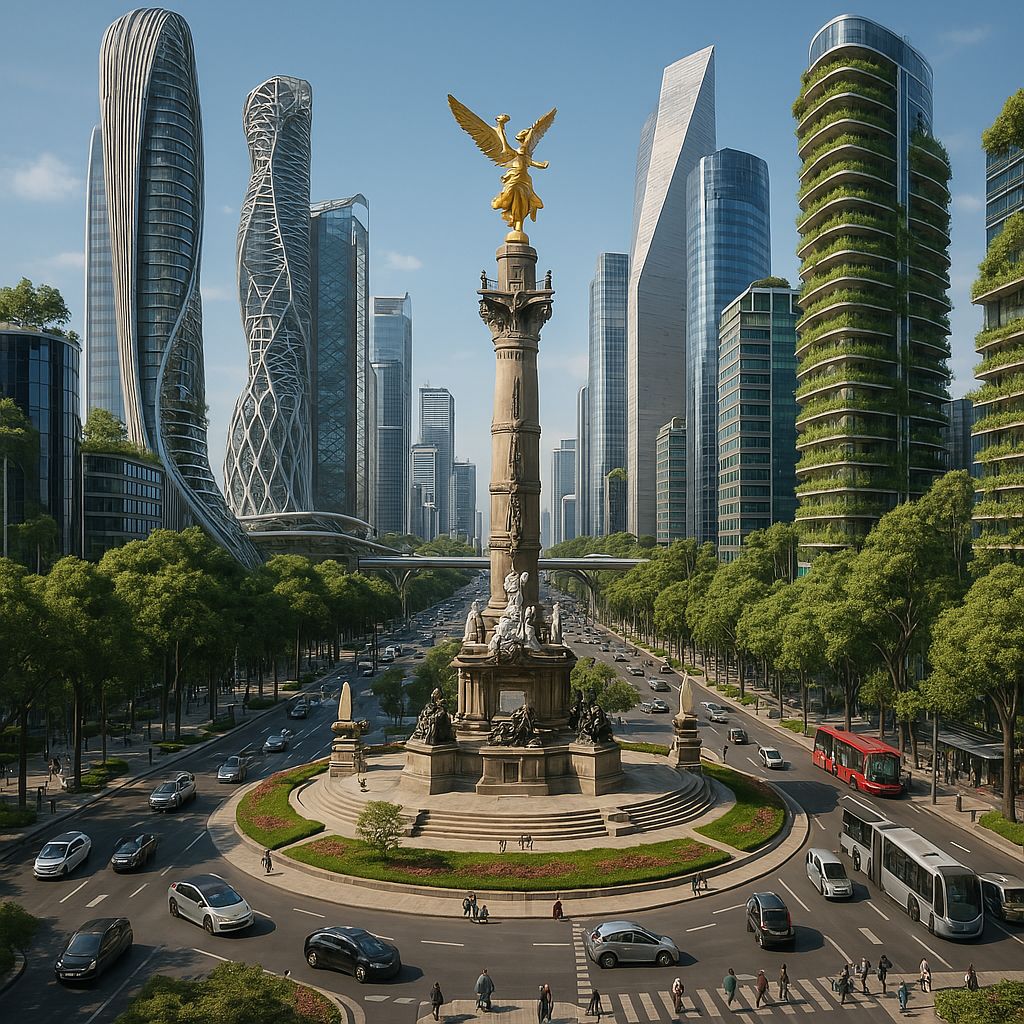
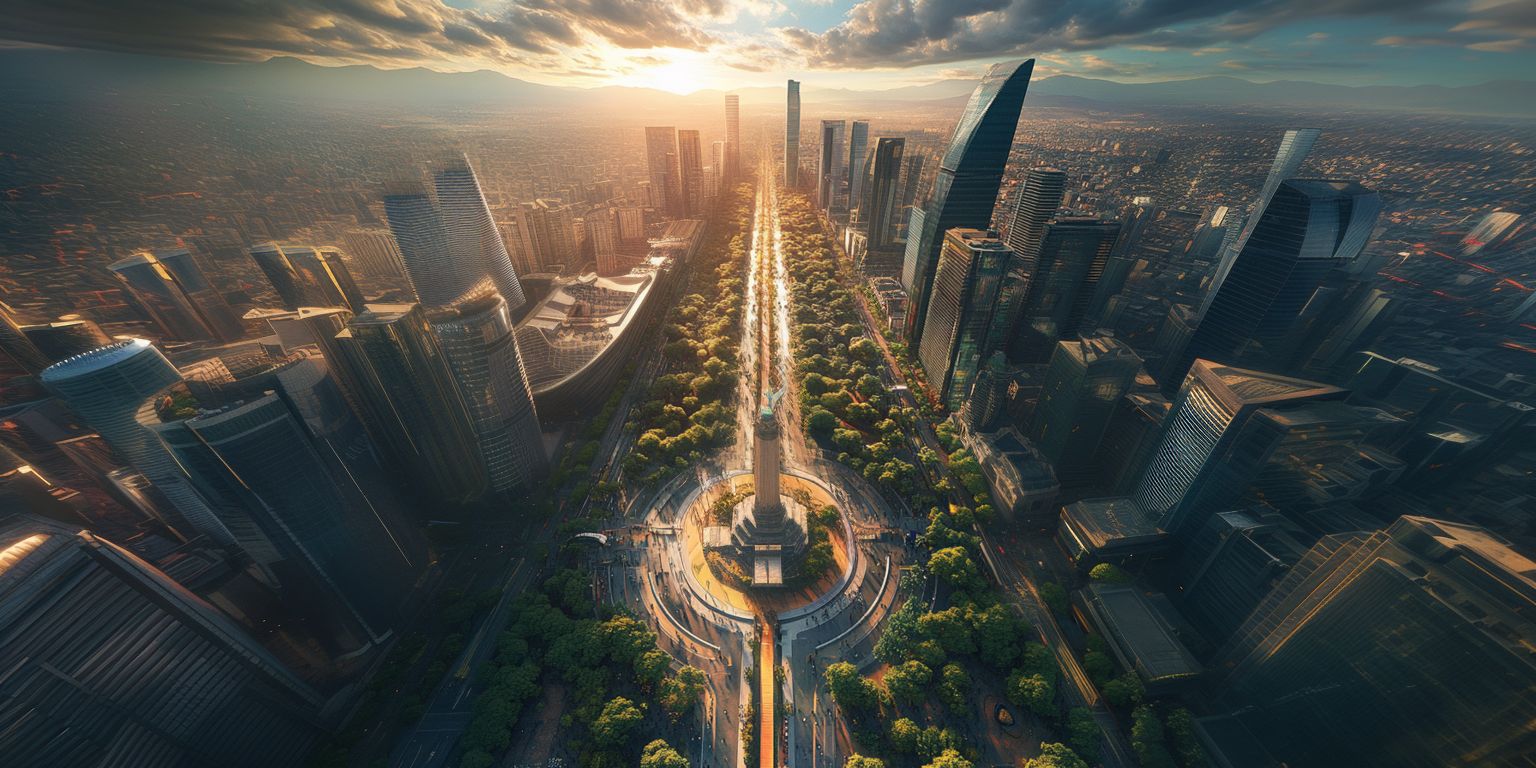
Current status

Where the case stands today.

● Judgments issued · amparo pending

Annulment proceeding resolved: the Chamber upheld the denials

Having exhausted the administrative channel with the dismissals of June 10, 2025 (official letters DRPDA/SROC/TL1971/2025 and TL1972/2025), the plaintiff filed an annulment proceeding through the ordinary channel before the Specialized Intellectual Property Chamber of the TFJA. INDAUTOR answered the complaint, the plaintiff submitted its closing arguments and, in May 2026, the Chamber handed down judgments in both case files upholding the denials (see the 2026 Update section).

The relief sought was the outright annulment of the challenged resolution and an order to register the work in the Public Registry of Copyright. It was not obtained. The next avenue is the amparo proceeding, so the judgments do not yet constitute definitive res judicata.

Case file 1637/25-EPI-01-10 · Instructing Magistrate Héctor Francisco Fernández Cruz

2026 Update

The SEPI has ruled: two judgments uphold the denial.

The experiment reached what it was aiming at from the start: a judgment. In May 2026, the Specialized Intellectual Property Chamber of the TFJA resolved both annulment proceedings and upheld INDAUTOR's denial in both case files. One prompt or five: the Chamber did not even distinguish between the two hypotheses. Its verbatim phrases are, today, the map of the Mexican criterion on AI-generated works.

CIUDAD DE MÉXICO 2100 work generated with ChatGPT-4o
Judgment · May 6, 2026

Case file 1637/25-EPI-01-10 — "CIUDAD DE MÉXICO 2100 — UN SOLO PROMPT — OPEN AI GPT4o"

TFJA · Specialized Intellectual Property Chamber

The Chamber upheld the validity of INDAUTOR's denial: instructing the artificial intelligence does not constitute creation. Read the full judgment (in Spanish) →

MEXICO 2,100 work generated with Midjourney
Judgment · May 29, 2026

Case file 1636/25-EPI-01-7 — "MÉXICO 2,100 — 5 PROMPTS — MIDJOURNEY"

TFJA · Specialized Intellectual Property Chamber

The very same criterion for the five-prompt work: the degree of human involvement did not even enter the analysis. Read the full judgment (in Spanish) →

"...the instructions function as a commission or an abstract idea, but it is the artificial intelligence that materializes it — an act the user does not control."
Judgments 1637/25-EPI-01-10 and 1636/25-EPI-01-7 · TFJA, Specialized IP Chamber (own translation; Spanish original)
"...the Midjourney platform did not act as an auxiliary tool, but as the executor."
Judgment 1636/25-EPI-01-7 · TFJA, Specialized IP Chamber (own translation; Spanish original)
"...choosing an image from among several pre-existing options automatically generated by the artificial intelligence constitutes an evaluative activity, not a creative one."
Judgments 1637/25-EPI-01-10 and 1636/25-EPI-01-7 · TFJA, Specialized IP Chamber (own translation; Spanish original)
"...good faith in the procedural aspect does not cure the nonexistence of the object of the registration."
Judgments 1637/25-EPI-01-10 and 1636/25-EPI-01-7 · TFJA, Specialized IP Chamber (own translation; Spanish original)
● Pending: the amparo

Not yet definitive res judicata

The two judgments uphold INDAUTOR's denial, but they are not the final word of the Mexican legal system: the amparo proceeding remains pending, through which the case will seek to reach the Supreme Court.

Read the full analysis (in Spanish): Crear con IA no te da derechos de autor en México. Punto. →

1637/25-EPI-01-10 · Judgment May 6, 2026  ·  1636/25-EPI-01-7 · Judgment May 29, 2026

Why this icebreaker matters.

If the TFJA recognizes the human authorship behind a work made with AI, it would set the first criterion in Mexico that treats artificial intelligence as a creative tool — not as an author that displaces the person.

Methodological note, sources, and conflicts in the case file
SOLID (recorded in primary documents): (a) two filing numbers = two distinct works/case files: ...263900-01 (GPT-4o, one prompt) and ...254000-01 (Midjourney, five prompts), both in the DRAWING branch, author Aldo Ricardo Rodríguez Cortés (100%), attorney-in-fact Ulises Torres Gutiérrez; (b) power of attorney dated Apr 22, 2025; (c) TWO requests for clarification dated Apr 30, 2025 signed by Francisco Erasmo de los Santos Cordero (TL9444 = 3 points, GPT-4o; TL9449 = 4 points, Midjourney, includes a name correction), served on May 20, 2025; (d) response dated May 27, 2025; (e) TWO dismissals dated Jun 10, 2025 signed by Jessica Ivonne Martínez Guzmán (TL1971 = GPT-4o; TL1972 = Midjourney), with the verbatim conclusion that AI is 'sintética' without creativity/intellect/originality and closure under art. 17-A LFPA; (f) annulment proceeding docketed in case file 1637/25-EPI-01-10 (TFJA IP Chamber, Magistrate Héctor Francisco Fernández Cruz), INDAUTOR's answer by Perla Nancy Vásquez Castelán and closing arguments by Roberto Ibarra López. CONFLICTS AND GAPS (unresolved, not invented): 1) FILING DATE: the acknowledgments (RPDA Reports / Solicitud.md) record the 'Fecha de la solicitud' = 27/05/2025, while INDAUTOR's official letters and the complaints state that filing was made via INDARELÍN on Apr 25, 2025. Inconsistency: Apr 25, 2025 would be prior to the date of the acknowledgment and consistent with the Apr 30, 2025 request for clarification; May 27, 2025 coincides with the date of the response. Unresolved. 2) PRIOR INTERNAL ANALYSIS (AnalisisInicial.md): a firm working document dating the requirement as 'April 30, 2025' under number TL9444/2025 and the dismissal as TL1971/2025 of Jun 10, 2025; the primary official letters confirm those dates/numbers (TL9444 clarification request GPT-4o; TL1971 dismissal GPT-4o), so the alleged 'chronological inconsistency' flagged in the analysis stems from the filing-date conflict (point 1), not from an error in the official letters. 3) DIVERGENT OFFICIAL LETTER NUMBERS IN PROCEEDING-B: in the complaints/closing arguments of the annulment-proceeding-B group, the challenged act is identified as Official Letter DRPDA/SROC/TL9449/2025 dated July 3, 2025 and signed by Francisco Erasmo De Los Santos Cordero. This CONTRADICTS the primary official letters, where TL9449/2025 is the REQUIREMENT of Apr 30, 2025 (not a dismissal) and the dismissals are TL1971/TL1972 of Jun 10, 2025 signed by Jessica Ivonne Martínez Guzmán. Moreover, the PRAYER FOR RELIEF in the CLOSING ARGUMENTS seeks the annulment of official letter DRPDA/SROC/TL1971/2025 of Jun 10, 2025. It is not possible to determine whether TL9449/Jul 3 is a typo, an additional official letter, or a second action. Reported as unresolved. 4) DISMISSAL SERVICE DATE IN PROCEEDING-B: JuicioNulidad1.md (long version) says 'issued Jul 3, 2025 and served... on this same date, July 7, 2025' (internal contradiction); JuicioNulidad2.md (condensed version) says served 'on the same date' (Jul 3). Discrepancy between versions. 5) DATE TYPOS IN THE COMPLAINTS 'one p'/'five p': the dismissal appears as '10 de junio de junio de 2025' ('five p') and '10 DE JUNIO de julio de 2025' ('one p'); the consistent date is Jun 10, 2025. 6) NAME OF THE SIGNATORY: 'JESSICA IVONNE' ('five p') vs. 'JESSICA IVONNNE' (triple n, 'one p'); typographical error. 7) NAME ERROR IN ACKNOWLEDGMENT ...254000-01: 'ALDO RODRIGUEZ RODRIGUEZ CORTES' (vs. 'Aldo Ricardo Rodríguez Cortes'), the origin of the name clarification request in TL9449; corrected per TL1972. 8) VERBATIM TYPOS IN INDAUTOR OFFICIAL LETTERS (preserved): 'cincoprompts' (no space) in the Midjourney summary; 'no reconoce o a otro tipo de persona' (OCR/typo reproduced in the original PDF); SCJN citation 'ejecutoria de 16 de junio de 2016' for direct amparo on review 131/2021 (a date earlier than the case file — possible clerical error). 9) NATURE OF THE WORK IN THE COMPLAINTS: the plaintiff describes himself as the author of a 'literary work' despite the fact that these are images (DRAWING branch); an expert opinion 'en creación literaria' is offered. Possible imprecision by the petitioner. 10) DATE OF THE ANSWER TO THE COMPLAINT, DOCKETING, AND CLOSING ARGUMENTS: not specified in the documents (the ISO dates 2025-09-15 and 2025-10-01 in the timeline are approximate ordering markers, not actual dates). 11) THERE IS NO JUDGMENT OR STAMPED TFJA ACKNOWLEDGMENT in the available documents; the annulment-proceeding-A group only computes the deadline (without a date of physical filing). 12) DERIVED vs. PRIMARY DOCUMENTS: INDAUTOR's reasoning and the citations attributed in AnalisisInicial.md, Contestacion.md, the argument .md files (UltraVires, NoHayGeneracionEspontanea, etc.), and the proceeding .md files (JuicioNulidad1/2) are transcriptions WITHIN the defense's briefs or working documents; the verbatim passages must be confirmed against the source official letters when these were not in the same group. The official letters TL9444, TL9449, TL1971, and TL1972 are indeed primary within their groups. 13) VERIFIABILITY OF THESES/JURISPRUDENCE: the large body of SCJN/TCC/TFJA theses cited (keys such as 'P./J. 109/99', 'VII-P-SS-7', 'I.4o.A.91 A', etc.) COULD NOT be verified in the SJF/TFJA; several appear generic or adapted and must be corroborated before being treated as actual holdings. The most likely/specific to the subject matter are judgment 788/24-EPI-01-2 and Thesis IX-CASE-PI-3. 14) SCAN QUALITY: the identifications (passport, INE) and personal data were read from low-resolution scans; verify digits before any use. 15) SOURCE ACCESS IN THIS ENVIRONMENT: the case PDFs/.md files are NOT present in the working tree consulted (only a public research note exists confirming the applicant's Lawgic identity/affiliation); therefore this model was built from the six provided extractions, without direct re-verification of the primary documents.
ESEN